
The Ephemeral Art of Firework Light
There is a moment of collective breath held tight in the chest of a crowd just before the first firework is launched. It’s a silent, electric anticipation that shatters the moment a single ember climbs into the night sky, trailing a ribbon of smoke. Then, the crackle, the boom, and the sky itself blooms into a breathtaking, transient masterpiece.
Firework light is more than just illumination; it is the choreography of chemistry and art. Each burst is a meticulously engineered galaxy, with stars of aluminum and magnesium burning at thousands of degrees to create a pure, blinding white. The colors themselves are the poetry of elements—strontium salts painting the night in passionate reds, copper chlorides mimicking the deep blue of a tropical lagoon, and barium nitrates creating a brilliant, verdant green.
What captivates us most, however, is not just the science, but the ephemeral nature of the light. Unlike the steady glow of a star or the constant hum of a streetlamp, the firework’s brilliance is a fleeting promise. We watch a cascading willow of golden sparks fall toward the earth, or a peony burst outward in a perfect sphere of fuchsia, knowing we have only seconds to soak in its beauty before it fades to ash.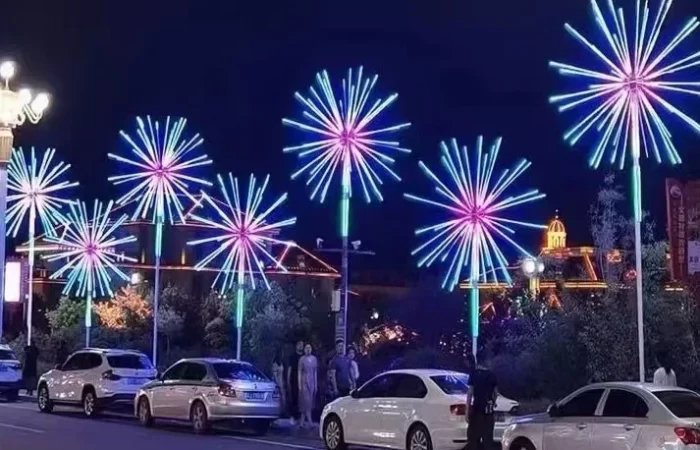
This fleetingness is its power. It mirrors the preciousness of celebration itself—a moment of shared joy that, like the light, is intense, beautiful, and impossible to hold onto. The noise fades, the smoke clears, and the stars return. But for that one brilliant moment, we were all united under a canopy of impossible, glowing color, witnesses to a magic that only exists to be remembered.