
How to Source Decorative Lights for Parks, Shopping Malls and City Streets
A beautiful lighting display can become a costly problem if the products do not fit the installation site. The lights may look perfect in a catalog, but what happens when they have to hang above a busy street, survive a rainy season, or be installed before a shopping mall opens?
To source commercial decorative lights successfully, start with the project location—not the product catalog. Identify the viewing distance, installation surface, weather exposure, power supply, visitor access and maintenance requirements. Then choose suitable lighting products and request specifications for the exact models under consideration.
This guide explains how to plan decorative lighting for city streets, shopping malls, parks, hotels and events. It also shows what information buyers should prepare before requesting quotations for large outdoor decorative lighting projects.
Quick Answer: Match the Lights to the Space
Most commercial projects need a mix of focal-point lighting, area decoration and smaller supporting lights. The right combination depends on where people will see the display and how it will be installed.
City streets
Choose clearly visible motifs and pole decorations, with suitable mounting and traffic clearances.
Shopping malls
Combine entrance features, facade lighting and decorative accents around visitor areas.
Parks and attractions
Use landscape lights, firework-style features and themed displays suited to outdoor exposure.
Hotels and events
Focus on welcoming entrances, photo areas, ambient string lighting and decorative event features.
1. City Streets and Lamp Posts: Start with Visibility and Mounting
City street decorative lighting has a different job from lighting inside a building. Drivers and pedestrians often see street decorations from farther away, sometimes while moving. A small, detailed design that looks attractive up close may become difficult to recognize from across the road.
For streets and lamp posts, commercial motif lights are a useful category to explore. Snowflakes, stars, holiday symbols and other clear silhouettes can help create a consistent theme along a street or public square.
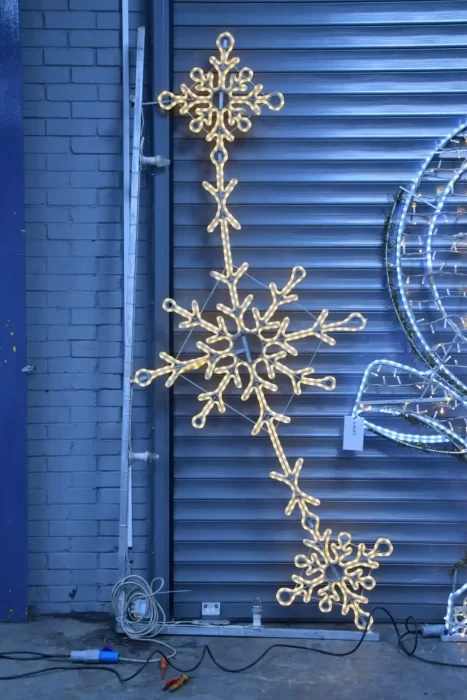
Choose Designs That Work at Street Level
A repeated set of simple motifs can make a long street feel connected. Larger decorative pieces may work better at intersections, entrances or public gathering areas. Smaller designs can support the main theme without competing for attention.
Before selecting the product size, consider the viewing direction, pole height, nearby buildings and existing streetlights. A display should remain recognizable without blocking traffic signs, signal lights or important sightlines.
Check the Existing Poles Before Ordering
Do not assume that every street pole can support the same decoration. Pole diameter, material, condition, attachment permissions and available power can vary across one project.
The project team should confirm the mounting location and obtain the necessary structural and electrical reviews before installation. Decorations installed above roads also need appropriate vehicle clearance and secure cable routing.
City Street Procurement Checklist
- Pole location, diameter, height and condition
- Expected viewing distance and display orientation
- Proposed motif dimensions and weight
- Mounting brackets, fixing method and wind-load information
- Power connection and cable routing
- Outdoor exposure and applicable safety requirements
- Installation access and seasonal removal plan
Maintenance matters: Repeated decorations are easier to manage when the installer can identify each unit, access electrical connections and replace damaged components without dismantling the entire display.
2. Shopping Malls: Plan Around Entrances, Facades and Visitor Flow
Decorative lights for shopping malls should do more than fill an empty space. They need to fit the architecture, support the seasonal theme and work around normal shopping activity.
Start by dividing the property into three areas: main entrances, large visual spaces such as atriums or facades, and smaller areas where visitors walk, gather or take photographs.
Match the Product to the Display Area
A large entrance may suit a recognizable motif or illuminated centerpiece. A wide facade may need repeated decorations that look balanced from the opposite side of the street. Indoor atriums can use suspended or freestanding features when their loads, attachment points and operating conditions have been approved.
For entrances and commercial facades, shaped motifs can provide strong visual identity. Commercial string lights, curtain lights and related decorative products may work better for covered areas, overhead accents or smaller architectural details, depending on their individual specifications.
Viewing Distance Changes the Design
A visitor standing beside a photo display will notice color, finish and small details. Someone viewing the shopping mall from a parking area or nearby road will notice overall size, shape and contrast first.
This is why the same lighting design should not automatically be used for both spaces. A large feature can attract attention from a distance, while smaller pieces help complete the experience closer to the stores.
Work with the Facilities Team
Shopping malls often have strict rules for installation hours, ceiling loads, access equipment and electrical work. Decoration plans must also respect fire protection systems, accessible routes, shop entrances and emergency exits.
Before placing an order, ask the property manager or installation contractor to approve the installation points and the method used to secure each product.
Shopping Mall Procurement Checklist
- Entrance, facade and atrium measurements
- Visitor viewing distance and photography areas
- Indoor, covered or fully exposed installation location
- Approved mounting points and structural load limits
- Power supply and control requirements
- Fire, access and property management restrictions
- Installation windows and maintenance access
Maintenance matters: Choose products that can be inspected without blocking customer circulation. If a decoration requires a lift or temporary area closure, include that work in the operating plan.
3. Parks and Scenic Attractions: Choose Lights for the Outdoor Environment
Decorative lights for parks must work with the landscape rather than compete with it. Trees, walking paths, open lawns and scenic viewpoints offer different opportunities for creating an attractive nighttime experience.
Parks also bring practical challenges. Some display areas may have uneven ground, long cable runs, exposed electrical connections or limited maintenance access. These conditions should influence product selection from the beginning.
Select Products for Paths, Gardens and Focal Points
For garden beds and landscaped areas, landscape decorative lights can create accents around planting areas and selected features.
Larger attractions may benefit from outdoor firework lights, whose radiating shapes can serve as visible focal points. However, the final choice must be based on the actual installation site and the technical specifications of the chosen model.
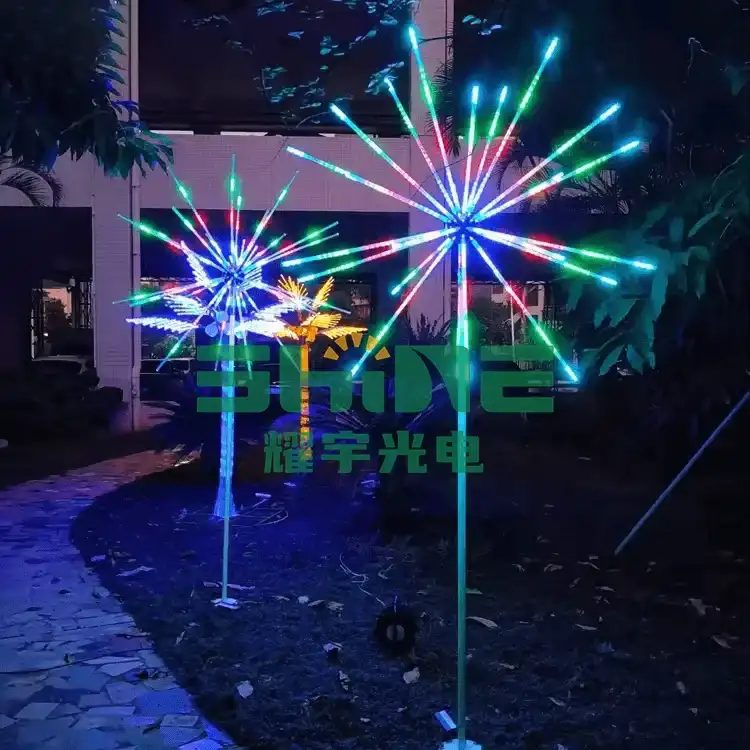
A Real Product Specification Example
One documented example in the Shinesall catalog is the YYL-ES001 LED Firework Light. Its published product information lists the following configurations:
Check More Than the Waterproof Rating
Outdoor decorative lighting projects need careful attention to rain, dust, wind, temperature changes and public access.
An IP65 marking describes a level of protection against dust and water ingress under defined test conditions. It does not automatically establish wind resistance, structural safety, electrical compliance in every market or suitability for flooding.
Buyers should request information about the complete product assembly, including connectors, power supplies, controllers and mounting hardware. The project team should also assess drainage, ground conditions and any possible contact with visitors.
Park and Scenic Area Procurement Checklist
- Landscape layout and proposed display locations
- Viewing points and available installation space
- Ground fixing, bases and structural requirements
- Actual weather conditions and exposure level
- Product and connection-system protection ratings
- Electrical distribution and cable protection
- Visitor access, maintenance routes and storage plans
Maintenance matters: For larger parks, identify how technicians will reach each lighting feature. A product positioned far from a service road may need a different maintenance and installation plan from one placed beside a paved walkway.
4. Hotels, Weddings and Events: Focus on Guest Experience and Flexibility
Hotels and event venues often need decorative lighting that creates atmosphere without interfering with daily operations. The most useful product is not always the largest one. Sometimes a carefully lit entrance, pathway or backdrop does more than a complicated display.
In these spaces, people usually experience the decorations at closer distances. Color, appearance, glare and the quality of the surrounding lighting therefore deserve more attention.
Choose Products by Guest Area
Event backdrops and ceremonial pathways may suit wedding decorative lights, including butterfly-themed products and other decorative features.
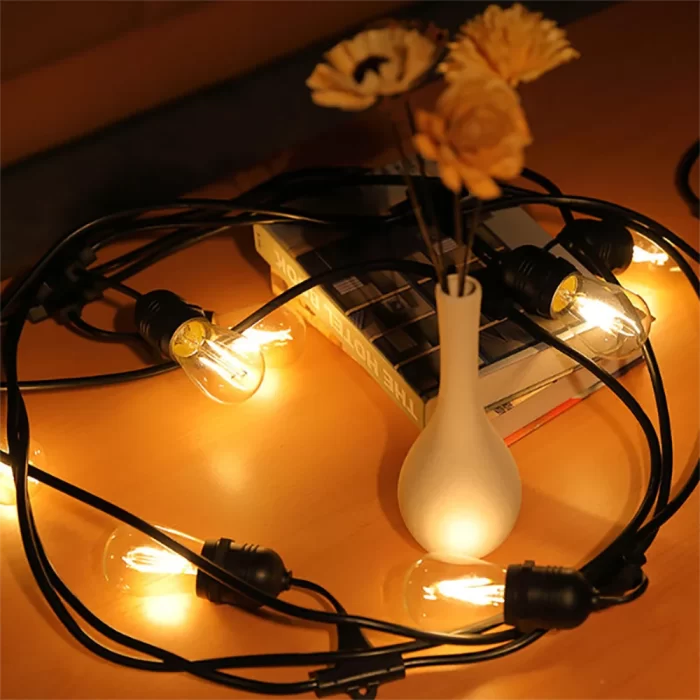
Terraces, courtyards and hospitality seating areas may use commercial string lights to provide a softer decorative atmosphere. Product selection should account for the available power, attachment points, installation duration and weather exposure.
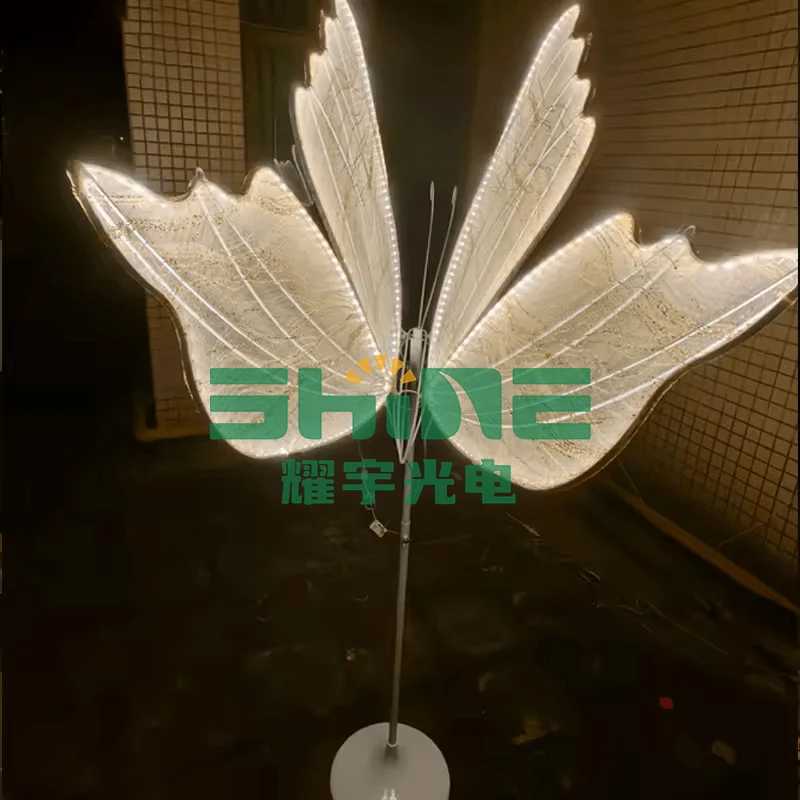
Do Not Assume Every Wedding Light Is Outdoor-Rated
This is an important detail for buyers planning outdoor weddings or hotel garden events.
For example, Shinesall’s published information for butterfly wedding decorative light model SHI-WD002 lists an IP33 rating.
That specification should not be treated as equivalent to an IP65-rated outdoor product. For an installation exposed to direct rain, buyers must confirm whether a different product or a suitably protected installation is required.
Temporary events introduce another consideration: how often will the products be assembled, transported, packed and stored? Reusable decorations may need protective cases, clear assembly instructions and replacement components.
Hotel and Event Procurement Checklist
- Entrance, pathway, terrace or stage dimensions
- Guest viewing distance and photography needs
- Temporary or permanent installation
- Indoor, covered or open-air use
- Power, controls and permitted cable routes
- Mounting or freestanding support requirements
- Packing, transport, reassembly and storage needs
Maintenance matters: For event companies managing multiple venues, ask about replaceable components and packaging. A lighting product that is easy to move and inspect can be more practical than one that requires complicated handling after every event.
Compare Commercial Decorative Lights by Project Type
The best lighting category depends on the location, not just the design theme. Use this quick comparison to build an initial shortlist before checking individual product specifications.
City Streets and Lamp Posts
Products to consider: 2D or 3D motif lights and suitable pole decorations.
Viewing priority: Recognizable shapes from a distance.
Installation priority: Pole compatibility, secure mounting and traffic clearance.
Main sourcing risk: Incorrect mounting assumptions or missing structural approval.
Shopping Malls and Commercial Facades
Products to consider: Motif displays, string lights and appropriate decorative accents.
Viewing priority: Large features at entrances, smaller details close to visitors.
Installation priority: Approved fixing points, access routes and working hours.
Main sourcing risk: Products that conflict with facility or fire-safety restrictions.
Parks and Scenic Attractions
Products to consider: Landscape lights, firework lights and suitable outdoor motifs.
Viewing priority: Attractive focal points and coordinated landscape accents.
Installation priority: Weather exposure, ground conditions and electrical protection.
Main sourcing risk: Inadequate environmental protection or difficult maintenance access.
Hotels, Weddings and Events
Products to consider: Wedding decorative lights, string lights and selected event features.
Viewing priority: Close-range appearance and comfortable atmosphere.
Installation priority: Event layout, exposure rating and transport requirements.
Main sourcing risk: Using an indoor or sheltered-area product in an exposed outdoor setting.
How Viewing Distance Affects Lighting Selection
One of the easiest mistakes in commercial holiday lighting is choosing a product from a close-up photograph without considering how it will look at the actual site.
A decoration that looks detailed and bright in a showroom may appear much smaller when installed above a street or on a large building facade.
These are practical design categories, not fixed engineering distance standards. Final dimensions should be checked using site photographs, actual measurements and, where useful, a sample or full-size layout preview.
What Specifications Should You Send Before Requesting a Quote?
A useful quotation starts with a useful project brief. If a buyer only sends a product photo and asks for the price, the supplier may not have enough information to recommend an appropriate configuration.
Instead, prepare the information below. It will help your team compare quotations based on the same project requirements.
Commercial Lighting Project RFQ Checklist
1. Project location and application
Country, city or region, and whether the installation is for a street, mall, park, hotel or event venue.
2. Site layout and installation conditions
Dimensions, photographs, mounting locations, available power and environmental exposure.
3. Preferred products and appearance
Product category, reference images, desired dimensions, colors, lighting effects and any existing design drawings.
4. Expected quantity
Estimated units, number of installation locations and whether multiple product types will be combined.
5. Electrical and technical requirements
Required operating voltage, control methods, weather protection, mounting details and applicable documentation for the target market.
6. Delivery and installation schedule
Required arrival date, installation period, event opening date and removal date if the project is seasonal.
7. Packaging and shipment destination
Delivery country, destination address or port, packaging needs and any special handling requirements.
8. Maintenance and replacement requirements
Expected operating period, access conditions, spare parts, repair arrangements and storage plans.
A Practical Five-Step Sourcing Process
For multi-location projects, it helps to separate design decisions from purchasing decisions. This reduces the risk of ordering a product before the installation requirements have been approved.
Step 1 — Define the Site
Record the installation locations, viewing areas, weather conditions, power availability and project deadlines.
Step 2 — Shortlist Product Categories
Match motifs, firework lights, string lights, wedding decorations and landscape lights to the different areas.
Step 3 — Confirm Specifications
Ask for model-specific dimensions, protection ratings, electrical details, product photographs and mounting information.
Step 4 — Review Samples and Quotations
Review samples when needed. Check appearance, dimensions, connections and packaging. Compare quotations using the same quantities, specifications, delivery terms and included accessories.
Step 5 — Approve Before Production
Confirm the final specification, approved sample or drawings, inspection requirements, production schedule and shipping arrangements before the order proceeds.
For seasonal projects, build time into the schedule for design review, sampling if required, production, freight, customs clearance, installation and testing. Do not assume that the production lead time is the same as the date the products will arrive at the venue.
What Buyers Should Check Before Approving Outdoor Lighting
Product appearance is only one part of the decision. Before approving outdoor commercial decorative lights, buyers should review the following questions with the supplier and the qualified installation team:
- Is the specific product configuration suitable for its intended exposure?
- Are connectors, controllers and power supplies protected appropriately?
- Are the mounting method and structural loads compatible with the site?
- What electrical safety documents are required for the destination market?
- Who is responsible for installation, inspections and maintenance?
- How will failed components be repaired or replaced?
- Can the decorations be stored and reused safely if the project is seasonal?
Public-space projects may also require local permits, engineering approval and electrical inspections. Decorative products must not interfere with functional lighting, traffic control, emergency access or accessibility requirements.
For broader background on roadway lighting and public-space considerations, the Federal Highway Administration Lighting Handbook discusses roadway visibility, visual effects and environmental considerations. It is a planning reference, not a replacement for applicable local codes or project-specific engineering.
Frequently Asked Questions
What types of commercial decorative lights are suitable for city streets?
City streets commonly use decorative motifs and pole-mounted features with clear shapes that can be seen from a distance. The selected products must match the pole structure, installation height, local weather conditions and electrical requirements. A qualified team should verify the mounting and safety details.
How do I choose decorative lights for a shopping mall?
Start with the main entrance, facade, atrium and visitor areas. Choose larger visual features where long-distance recognition matters, and smaller decorative accents for close-range spaces. Check mounting permissions, access routes and property requirements before ordering.
Are IP65 decorative lights always suitable for outdoor projects?
No. IP65 describes specific dust and water ingress protection characteristics. Outdoor suitability also depends on the complete electrical assembly, weather conditions, mounting system, structural safety and local requirements. Always confirm the specifications of the exact product and configuration.
What information is needed to quote a park lighting project?
Prepare the site layout, intended installation locations, preferred lighting products, estimated quantities, target dimensions, available power, environmental conditions, destination and required delivery date. Photographs and drawings can help the supplier understand the site.
Can the same decorative lights be used for parks, malls and weddings?
Some products may suit more than one type of project, but the installation conditions can differ significantly. A decorative light intended for a sheltered wedding venue should not automatically be used in an exposed public park. Check the individual model’s ratings and installation requirements.
How early should buyers start sourcing commercial holiday lighting?
Start early enough to complete design approval, specification review, sampling where necessary, production, shipping and installation before the opening date. The required schedule depends on the products, quantity, customization and destination. Ask the supplier to confirm the current lead time for the exact order rather than relying on a general estimate.
Build Your Lighting Plan Around the Project
Sourcing commercial decorative lights becomes easier when every product has a clear purpose and an approved installation location.
City streets need recognizable designs and reliable mounting. Shopping malls need decorations that work with architecture and visitor movement. Parks need careful outdoor protection and maintenance planning. Hotels and events need the right balance of atmosphere, appearance and flexibility.
Start with the site, then choose the lighting category. Once the dimensions, environmental conditions and installation requirements are clear, product comparisons and quotations become much more useful.
Planning a Commercial Decorative Lighting Project?
Whether you are planning a city street display, shopping mall decoration, park installation or hotel event, the right starting point is your project brief.
Share your application, approximate dimensions, product preferences, estimated quantity, destination and target installation date. The Shinesall team can review the available product options and discuss the specifications needed for your inquiry.
Submit Your Project Requirements
You can also return to the Shinesall home page to explore the full product range.