
Custom Christmas String Lights for Retailers & Online Sellers:OEM/ODM
Custom Christmas String Lights for Retailers & Online Sellers: OEM/ODM Wholesale Solutions to Boost Holiday Sales
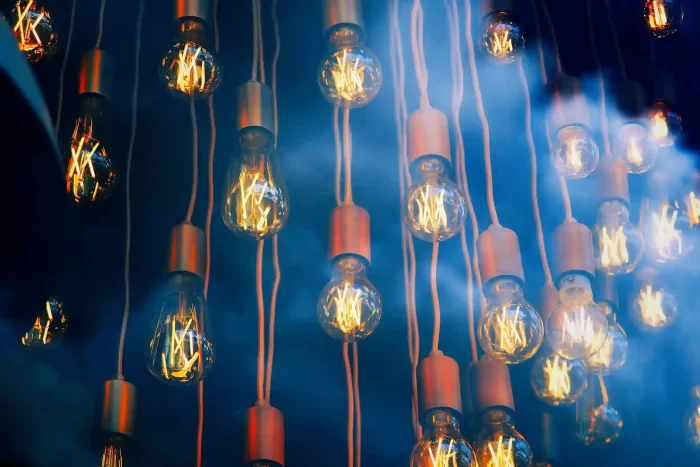
Hanging Edison-style bulb string lights, hero for Custom Christmas String Lights
Overall, Custom Christmas String Lights through OEM/ODM manufacturing allow retailers and online sellers to create exclusive branded products with flexible minimum order quantities, typically starting from 500-1000 units per design. As a result, this OEM/ODM approach with Custom Christmas String Lights delivers higher profit margins—often 40-60% compared to reselling generic products—while building brand differentiation in a market projected to reach $11.3 billion globally by 2033.In other words, Custom Christmas String Lights let you compete on uniqueness—not price.
Why Custom Christmas String Lights Drive Retail Success
The holiday lighting market has undergone a fundamental shift. The global Christmas lights market grew from $8.09 billion in 2024 and is projected to reach $11.30 billion by 2033, with LED technology now representing 72% of the lighting market, with over 2.6 billion LED strands sold in 2023. However, for retailers and online sellers, this growth presents both opportunity and challenge—generic products flood marketplaces, compressing margins and making differentiation nearly impossible.
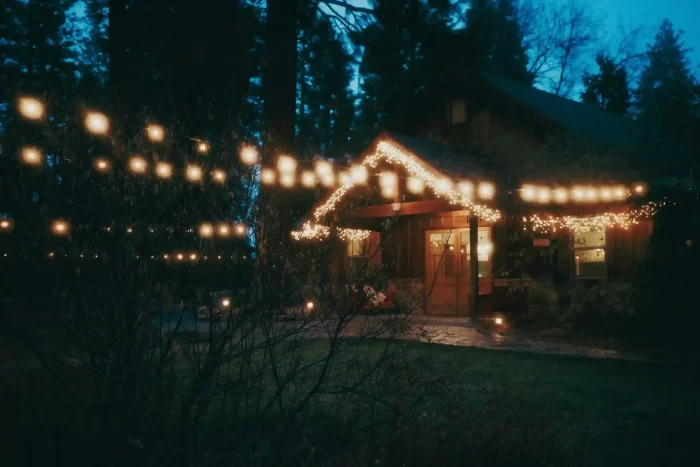
Outdoor roofline Christmas string lights example
In response, Custom Christmas String Lights manufacturing solves this problem directly. Specifically, when you develop exclusive Christmas light designs through OEM (Original Equipment Manufacturing) or ODM (Original Design Manufacturing) partnerships, you create products competitors cannot replicate. Your brand becomes the sole source for specific designs, colors, or features that resonate with your target customers.
Notably, the financial impact is substantial. Exclusive designs command higher retail prices, with margins reaching 60% for well-positioned brands, compared to typical 15-25% margins on commodity lighting products. For example, a retailer sourcing generic string lights at $3 wholesale and selling at $9.99 earns $6.99 per unit (70% margin). By contrast, that same retailer with a custom exclusive design can source at $4.50 but command $14.99 retail, earning $10.49 per unit (70% margin on higher base)—a 50% increase in absolute profit per sale.
Understanding OEM vs ODM Christmas Lights Manufacturing
In practice, the terms OEM and ODM represent distinct manufacturing approaches, each serving different business needs and capabilities.

Custom Christmas light bulb details display
OEM Custom Christmas String Lights Manufacturing
For Custom Christmas String Lights, OEM manufacturing means you provide complete product specifications and the manufacturer produces exactly what you’ve designed. In other words, you control every detail—LED spacing, wire gauge, connector types, color temperatures, packaging design, and quality standards.
Therefore, this approach works best when you have specific product vision, technical expertise, and budget for prototyping. You might specify 10mm wide-angle warm white LEDs at 4-inch spacing on 18-gauge white wire with IP65 waterproofing and female/male connectors every 25 feet. The manufacturer executes your specifications but doesn’t contribute design input.
On the one hand, OEM advantages include complete control over product differentiation, protection of proprietary designs, exact alignment with brand positioning.
On the other hand, OEM requirements include design capabilities in-house or via consultants, technical knowledge of electrical specifications, typically higher MOQs (1000-3000 units), longer development timelines (8-16 weeks from concept to production).
ODM Christmas String Lights
For Custom Christmas String Lights, ODM manufacturing means you select from the manufacturer’s existing designs and customize them through branding, packaging, minor specification adjustments, or color variations. The manufacturer owns the core product design but adapts it for your brand.
Meanwhile, this approach accelerates time-to-market and reduces upfront costs. For example, you might choose the manufacturer’s popular 50-LED fairy light design in copper wire, specify warm white instead of their standard multicolor, add your brand name to the controller box, and design custom retail packaging.
ODM advantages: Faster market entry (4-8 weeks typical), lower MOQs (500-1500 units), reduced development costs, proven designs with established quality.
ODM considerations: Less product differentiation (other retailers may source similar base designs), limited technical customization, dependency on manufacturer’s design roadmap.
Hybrid Approaches
Many manufacturers provide OEM/ODM solutions catering to businesses with low MOQ requirements. Consequently, smart retailers often start with ODM to test market response, then transition to OEM for bestselling product lines once volume justifies the investment.
Key Product Categories for Custom Christmas String Lights
To begin with, understanding which product categories offer the greatest customization value helps focus your development efforts.
LED Mini String Lights
The foundation category for Christmas lighting. These 5mm conical LED lights on green, white, or brown wire dominate indoor tree decoration and outdoor outlining applications.

LED mini string lights on Christmas tree
Customization opportunities: Wire color matching specific aesthetics (white for modern, green for traditional, brown for natural), LED spacing density (4-inch for dense coverage, 6-inch for budget options), color temperature precision (2700K warm white for cozy ambiance, 3000K for brighter displays), connector intervals for professional installation flexibility.
Market position: High-volume category with 3.7 billion lighting units sold globally in 2023. Differentiation comes through quality consistency, warranty terms, and packaging presentation rather than revolutionary features.
C7 and C9 Christmas Bulb String Lights
Larger ceramic-style bulbs delivering nostalgic aesthetic appeal. C7 bulbs (candelabra base) and C9 bulbs (intermediate base) create bold visual impact for outdoor residential and commercial displays.
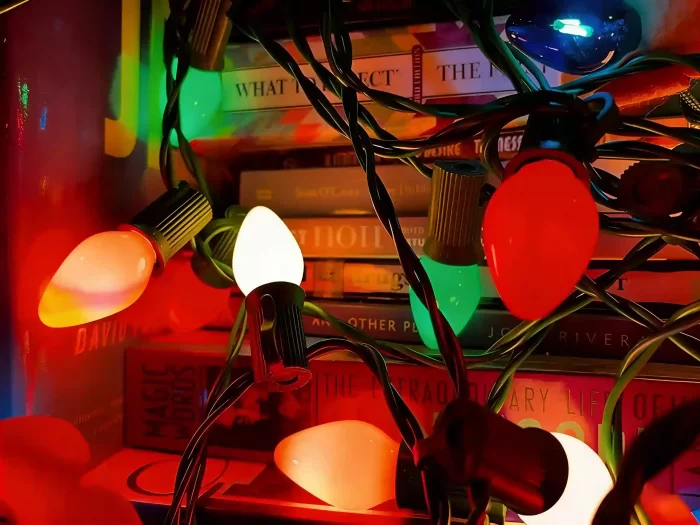
C9/C7 bulb string lights for premium displays
Customization opportunities: Exclusive bulb colors or finishes (frosted, transparent, or ceramic coatings), LED vs. traditional filament aesthetics, faceted lens designs, bulb shapes (smooth, strawberry, diamond), commercial-grade wire specifications (SPT-1 vs. SPT-2), spacing configurations (12-inch vs. 15-inch).
Market position: Premium category commanding higher price points. A typical price for Christmas string lights ranges from approximately $3.98 to $229, with C7/C9 commercial-grade sets at the upper end.
Fairy Lights and Copper Wire Strings
Ultra-flexible micro-LED lights on thin copper or silver wire, enabling creative shaping and delicate aesthetic applications.

Copper wire fairy lights for ODM customization
Customization opportunities: Wire finish (copper, silver, or colored coating), power options (battery-operated, USB, solar, plug-in), LED density per foot, waterproof ratings for outdoor use, controller features (timer, remote, multiple modes), decorative element integration (stars, snowflakes, beads).
Market position: Fastest-growing segment among online sellers. Lower per-unit costs enable bundling strategies and multi-pack offerings that increase average order value.
Smart/App-Controlled LED Christmas Lights
Connected lighting with smartphone control, color-changing capabilities, and programmable sequences. The global smart Christmas light market reached USD 1.74 billion in 2024 and is projected to attain USD 4.09 billion by 2033.

Color-changing outdoor Christmas lights display
Customization opportunities: App interface branding, pre-programmed sequences aligned with brand aesthetic, voice assistant integration (Alexa, Google), music synchronization features, energy monitoring displays, timer and scheduling capabilities.
Market position: Premium pricing justified by technology features. Early adopters and tech-savvy consumers will pay 200-300% premiums over standard lighting.
Specialty Shape and Decorative Strings
Lights integrated into decorative shapes—icicles, snowflakes, stars, net configurations, curtain arrangements.
Customization opportunities: Unique shape designs exclusive to your brand, size variations for different applications, weather resistance specifications, hanging mechanisms, color combinations.
Market position: Niche categories enabling premium positioning. Custom shapes create strong visual differentiation on retail shelves and product photography.
Critical Specifications for Wholesale Christmas String Lights
Successful custom Christmas lighting requires attention to technical specifications that impact both product performance and customer satisfaction.
Electrical and Safety Specifications
LED specifications: Color temperature (2700K-6500K), brightness output (lumens per bulb), viewing angle (120-140 degrees typical), LED quality grade (impacts longevity and color consistency).
Wire specifications: Conductor gauge (18-22 AWG typical), insulation type (SPT-1 for indoor, SPT-2 for outdoor), wire color and coating durability, weather resistance ratings.
Power and connectivity: Input voltage (110V North America, 220V Europe, low-voltage DC options), wattage per strand, maximum connectable sets, connector types and durability, plug certifications (UL, CE, VDE).
Safety certifications: UL (United States), CE (European Union), VDE (Germany), PSE (Japan), SAA (Australia). Certifications including UL, cUL, CE, GS, SAA ensure products meet safety requirements of destination countries.
Durability and Longevity
LED lifespan: LED lights last up to 100,000 hours, versus 3,000 hours for incandescent bulbs. Communicate this value clearly—quality LEDs outlast incandescent options by 30+ seasons.
Weather resistance: IP ratings (IP44 splash-proof minimum for outdoor, IP65 recommended for harsh weather, IP67 for submersion resistance), temperature operating ranges, UV-resistant wire coatings.
Physical construction: Bulb attachment method (preventing bulb loosening), junction box waterproofing, wire flexibility in cold temperatures, crush and pull resistance.
Energy Efficiency Metrics
LED efficiency dramatically impacts customer cost of ownership and environmental positioning. LED lights consume 80-90% less energy than incandescent bulbs, translating to monthly costs of $3.10 for 700 LED lights versus $26.79 for traditional lights.
Position energy efficiency prominently in product descriptions. Customers calculate return on investment when comparing upfront LED premiums against lower operating costs. A $24.99 LED set that saves $23 monthly over incandescent alternatives pays for itself in the first season.
Selecting the Right OEM/ODM Christmas Lights Manufacturer
Manufacturer selection determines product quality, production reliability, and long-term partnership value. Poor manufacturer choices result in delayed launches, quality issues, and damaged brand reputation.
Manufacturing Capabilities Assessment
Production capacity: Monthly output capacity exceeding 1,000,000 pieces ensures scaling ability. Verify manufacturer can handle your growth trajectory—starting with 2,000-unit orders but scaling to 20,000+ as your brand expands.
Technical expertise: In-house design teams (for ODM options), engineering support for custom specifications (for OEM projects), prototyping capabilities and speed, testing equipment for quality validation.
Quality control systems: Inspection protocols including 30% random inspection for new orders and 15% for repeat orders, inline quality checks during production, final inspection before shipping, defect rate documentation.
Certifications and compliance: Factory certifications (ISO 9001 quality management, ISO 14001 environmental, BSCI social compliance), product testing facilities, certification cost coverage in pricing or separate fees.
Minimum Order Quantities and Pricing
In reality, MOQs vary significantly based on customization level:
ODM with minimal customization: 500-1,000 units typical. Manufacturer absorbs most tooling costs across multiple clients using the same base design.
ODM with moderate customization: 1,000-2,000 units. Custom packaging, color specifications, or minor feature adjustments require dedicated production runs.
OEM with unique designs: 2,000-5,000 units. Custom tooling for unique bulb shapes, proprietary connector systems, or complex electronics necessitates higher volumes to amortize development costs.
Pricing structures typically include:
- Unit price: Decreases with volume (10-30% reduction from MOQ to 5x MOQ)
- Tooling/mold fees: $500-$3,000 for unique bulb shapes or packaging dies (usually waived after specific order volumes)
- Sample costs: $50-$200 for initial prototypes (often credited against production orders)
- Certification fees: $1,000-$5,000 per certification if not included in base pricing
Lead Times and Production Scheduling
Understanding realistic timelines prevents holiday season disruptions:
ODM timeline: Sample approval (1-2 weeks), production (3-5 weeks), shipping (3-6 weeks by sea, 1-2 weeks by air, 7-14 days by express). Total: 8-13 weeks from order to delivery.
OEM timeline: Concept development (2-4 weeks), prototype iteration (2-3 cycles, 1-2 weeks each), tooling creation (3-6 weeks), production (4-6 weeks), shipping (3-6 weeks by sea). Total: 16-24 weeks from initial concept to delivery.
For holiday products, work backwards from retail season start:
- Retail season begins: Late October
- Latest delivery needed: Mid-September
- Order placement for ODM: Late May to early June
- Order placement for OEM: January to February
Early ordering provides buffer for quality issues, shipping delays, or product adjustments.
Communication and Support
Effective communication prevents costly mistakes and delays:
Language capabilities: English-fluent sales and technical teams, response time expectations (24-48 hours standard, immediate for urgent issues).
Documentation practices: Detailed specification sheets with photos, pre-production samples requiring written approval, production progress updates with photos, packaging artwork proofing systems.
Problem resolution: Clear defect policies (replacement units, partial refunds, repair options), warranty terms of 2 years covering confirmed quality issues, process for handling customer complaints.
Product Development Process for Custom Christmas String Lights
A structured development process reduces risk and accelerates time-to-market.
Phase 1: Market Research and Product Definition
Define product vision before contacting manufacturers:
Target customer profile: Demographics (age, income, location), psychographics (values, aesthetics, shopping behavior), use cases (indoor vs. outdoor, tree vs. architectural, traditional vs. modern aesthetic).
Competitive analysis: Existing products in target retail price point, gaps in market (features, colors, quality levels not readily available), price sensitivity and value perception.
Product requirements document: Technical specifications (LED type, wire specifications, length options), aesthetic requirements (colors, finishes, shapes), packaging needs (retail-ready vs. bulk), target retail price and required wholesale cost.
Phase 2: Manufacturer Selection and Quotation
Request for Quotation (RFQ): Send detailed specifications to 3-5 potential manufacturers, request itemized pricing (unit costs, tooling fees, shipping options), clarify MOQ flexibility and volume discounts, establish timeline expectations.
Sample evaluation: Order samples from top 2-3 candidates ($100-$300 investment), test physical quality (wire durability, LED brightness/consistency, water resistance if applicable), assess packaging quality, compare against existing market products.
Manufacturer selection criteria: Price competitiveness (typically not the cheapest—prioritize value), quality consistency, communication responsiveness, timeline reliability from references, willingness to provide guarantees.
Phase 3: Prototype Development and Refinement
Initial prototype: Provide specifications or approve manufacturer design, receive physical samples, test in realistic conditions (outdoor weather exposure if applicable, extended burn-in testing).
Iterative refinement: Document any issues (color mismatch, connector looseness, LED brightness variation), request specific modifications, approve modifications in writing with updated specifications.
Pre-production sample: Final sample representing exact production standards, use for photography, marketing materials, and additional testing, written approval triggers production commitment.
Phase 4: Production and Quality Control
Production kickoff: Confirm order quantity, delivery timeline, and specifications in signed purchase order, request production schedule with key milestones, establish communication cadence (weekly updates typical).
In-process inspection: Inline and final inspection protocols ensure quality before shipping, request photos of production at 25%, 50%, 75%, and 100% completion, third-party inspection services available ($200-$500) for high-risk orders.
Final quality control: Pre-shipment inspection of finished goods, verification of packaging accuracy, testing of random samples from production lot, documented approval before shipping authorization.
Phase 5: Logistics and Import
Shipping method selection: Sea freight for cost efficiency on large orders (3-6 weeks transit), air freight for speed or smaller orders (7-14 days transit), express courier for samples or urgent small shipments (3-7 days).
Import requirements: Verify product compliance with destination country regulations, arrange customs clearance (freight forwarder or customs broker), budget for import duties (typically 0-6% for Christmas lights in most markets), prepare for potential port delays or inspections.
Branding and Packaging Strategies for Custom Christmas Lights
Packaging transforms commodity products into branded experiences that command premium prices.
Retail-Ready Packaging Design
Packaging structure: Window boxes showing actual product, hang-sell configurations for retail peg displays, shelf-stable boxes for table displays, multi-pack configurations increasing average order value.
Visual hierarchy: Brand logo prominent at top, product name and key benefit (e.g., “Energy-Saving LED,” “Commercial Grade”), high-quality product photography showing lights illuminated, clear technical specifications (length, LED count, plug type).
Information architecture: Front panel focuses on visual appeal and primary benefit, side panels provide technical details and features, back panel includes usage instructions, safety warnings, and brand story, barcode placement and SKU management for retail systems.
Brand Differentiation Elements
Unique value propositions: Energy efficiency savings calculated in dollars (“Save $23 per month vs. traditional lights”), lifespan advantages (25,000-75,000 hours lasting 6-7 seasons), safety features (cool-touch operation, fire risk reduction), warranty terms (2-3 years vs. 90 days typical for commodity products).
Aesthetic positioning: Color palette aligned with brand identity (warm, traditional colors vs. modern, minimalist schemes), photography style (lifestyle settings vs. product-only shots), fonts and typography reflecting brand personality, sustainability messaging if using recycled packaging materials.
Private Label Opportunities
Private labeling enables businesses to develop original product ideas and become known for signature items. Consider exclusive features that become synonymous with your brand:
Proprietary connectors: Custom end-cap designs with brand logo molded in, color-coded connector systems simplifying setup, patented connection mechanisms.
Signature color palettes: Exclusive color temperatures not offered by competitors, curated multi-pack color combinations, seasonal color releases (e.g., “Winter White,” “Holiday Warm”).
Distinctive packaging: Reusable storage solutions (wind-up reels, storage bags), sustainable packaging materials (recycled cardboard, minimal plastic), unboxing experience design for social media shareability.
Pricing Strategy for Custom Christmas String Lights
Strategic pricing balances profitability with competitive positioning.
Cost Structure Analysis
Landed cost calculation:
- Unit manufacturing cost: $X.XX
- Tooling/development (amortized): $X.XX
- Shipping and freight: $X.XX
- Import duties: $X.XX
- Total landed cost per unit: $X.XX
Retail channel costs:
- Marketplace fees (15-20% typical): $X.XX
- Payment processing (2-3%): $X.XX
- Marketing/customer acquisition (10-25%): $X.XX
- Returns/defects (5-10%): $X.XX
- Total channel costs: $X.XX
Target profit margin: 30-50% of retail price for sustainable growth and reinvestment.
Competitive Pricing Models
Value positioning: Price 10-20% below established brands while communicating comparable quality through extended warranty, detailed specifications, professional photography. Example: Market leaders at $29.99, your entry at $24.99 with “Same Commercial-Grade Quality, Direct Pricing.”
Premium positioning: Price 20-40% above commodity products while emphasizing exclusive features, superior lifespan, enhanced warranty, and brand story. Example: Generic LED strings at $12.99, your exclusive design at $17.99 highlighting “Patented Connector System” and “3-Year Replacement Guarantee.”
Bundle strategy: Individual string at competitive single-unit pricing, multi-pack bundles at discounted per-unit cost encouraging larger purchases. Example: Single 50-light string at $14.99, 3-pack at $39.99 ($13.33 each), 6-pack at $69.99 ($11.67 each).
Sales Channels for Custom Christmas String Lights
Multi-channel distribution maximizes market reach and revenue potential.
Amazon and Online Marketplaces
Online retail channels witnessed 34% growth in Christmas decoration sales since 2020, making marketplaces essential for volume.
Optimization strategies: High-quality product photography (minimum 6 images showing lights illuminated, package, details, lifestyle settings), keyword-rich product titles and descriptions incorporating “christmas string lights,” “led christmas lights,” and “outdoor christmas lights,” enhanced brand content (A+ pages) showcasing brand story and product comparisons, review management (follow-up sequences requesting feedback, prompt response to questions and concerns).
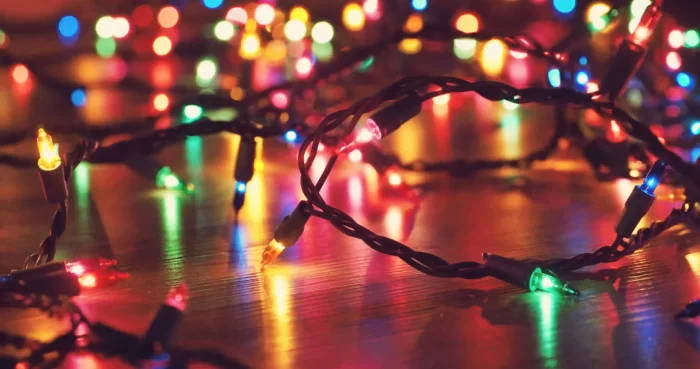
Details of custom-made colored Christmas string lights
Advertising approach: Sponsored product campaigns targeting high-intent keywords (“christmas tree lights,” “outdoor christmas decorations”), brand defense campaigns protecting brand name searches, seasonal budget increases during peak months (September-December).
Own E-Commerce Website
Direct sales capture full margin without marketplace fees while building customer relationships.
Conversion optimization: Professional product photography showing lights in use, detailed specification tables for technical buyers, energy savings calculators, customer reviews and installation photos, live chat support during holiday season, clear shipping timelines and guarantees.
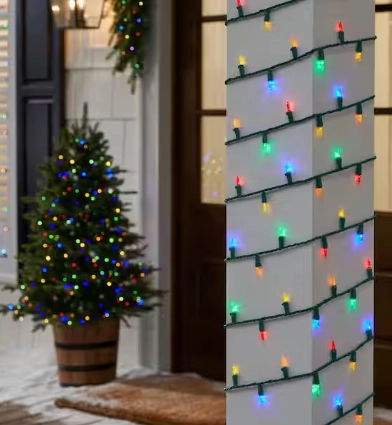
Custom-made Christmas string lights: actual installation effect display.
Customer acquisition: Content marketing (holiday decorating guides, energy-saving tips), SEO targeting long-tail searches (“best LED christmas lights for outdoor trees”), paid search campaigns during peak season, social media advertising on Facebook/Instagram, influencer partnerships with home décor creators.
Wholesale to Retail Stores
Physical retail provides product visibility and impulse purchase opportunities.
Retail partnerships: Local hardware stores and home improvement centers, seasonal pop-up shops and holiday markets, specialty lighting retailers, Christmas decoration stores.
Wholesale terms: 40-50% discount off retail pricing (keystone pricing model), minimum order quantities (typically 12-24 units per SKU), display materials provided (shelf talkers, product information sheets), flexible return policies for unsold seasonal inventory.
B2B Commercial Sales
Commercial decorators, property management companies, and municipalities purchase in volume at attractive margins.
Commercial differentiation: Extended warranty terms (3-5 years for commercial-grade products), technical specifications for professional installers, volume discount pricing tiers, dedicated account management.
Marketing and Positioning for Holiday Success
Seasonal products require concentrated marketing efforts during key decision windows.
Seasonal Timeline Planning
January-March: Product development and ordering, content creation (blog posts, photography, video), early wholesale relationship building.
April-June: Website optimization and SEO foundation, email list building and engagement, social media audience growth, influencer partnership negotiations.
July-August: Inventory arrival and quality verification, early-bird marketing campaigns (“Order Now for Guaranteed Delivery”), wholesale partner shipments.
September-November: Peak advertising spend, daily social media content, email marketing sequences, last-minute shoppers targeting.
December-January: Closeout promotions, customer satisfaction follow-up, review requests, planning for next season.
Content Marketing Approaches
Educational content: Energy savings calculators comparing LED vs. incandescent costs, installation guides with photos/video, weatherproofing tips for outdoor displays, safety checklists for electrical connections.
Inspirational content: Holiday decorating ideas showcasing your products, customer photo galleries, before/after transformation stories, lighting design principles (warm white for traditional, cool white for modern, color-changing for playful).
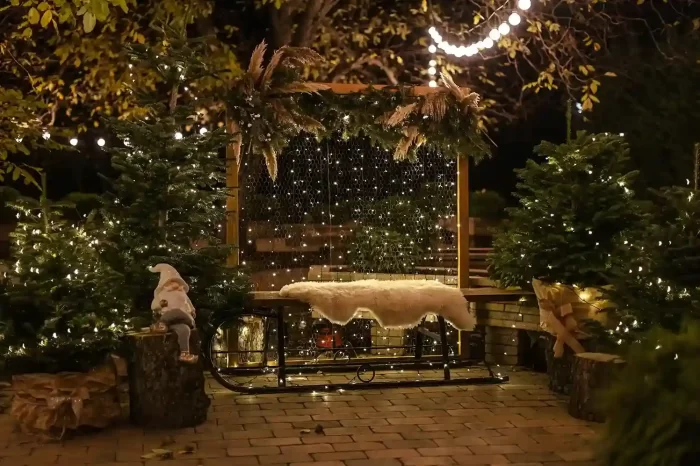
Lifestyle inspiration for holiday decorating content
Comparison content: Your brand vs. big-box store options (quality, warranty, price), LED technology benefits vs. traditional bulbs, indoor vs. outdoor product selection guidance.
Social Proof and Reviews
Customer validation drives purchase confidence for seasonal products:
Review generation: Automated email sequences requesting reviews 2-3 weeks after delivery, photo review incentives (discount on future purchase, entry in giveaway), prominent review displays on product pages and social media.
User-generated content: Customer photo sharing campaigns with branded hashtag, featuring customer installations on your social channels, video testimonials from satisfied buyers, installation time-lapse videos from customers.
Quality Control and Customer Service for Custom Christmas String Lights
Post-sale support protects brand reputation and drives repeat purchases.
Warranty and Guarantee Programs
LED lights’ extended lifespan enables multi-year warranties that differentiate from commodity products:
Standard warranty: 2-year replacement guarantee on manufacturing defects, simplified claim process (photo submission, no return required for small orders), replacement unit shipping at no cost.
Extended warranty options: 3-5 year coverage for premium product lines, transferable warranty increasing resale value, registration system tracking purchase dates and product details.
Customer Support Infrastructure
Pre-sale support: Live chat during peak shopping season (September-December), detailed FAQ addressing technical specifications, installation instructions, energy cost comparisons, sizing guides (lights needed for different tree heights, roofline lengths).
Post-sale support: Installation troubleshooting assistance, replacement bulb availability, defect claim processing, feedback collection for product improvements.
Handling Common Issues
LED failures: Identify if issue is individual LED (replacement bulb solution) vs. strand failure (warranty replacement), provide troubleshooting flowchart, stock replacement components.
Connector problems: Verify waterproofing in outdoor applications, check for corrosion from moisture exposure, upgrade recommendations for commercial-grade connectors.
Color consistency: Set expectations about batch variation, offer replacement if variation exceeds specifications, provide color matching service for multi-year purchases.
Sustainability and Environmental Positioning
Eco-friendly and sustainable decorations segment is growing at 7.2% CAGR, outpacing the overall market, creating opportunity for environmentally-focused brands.
Energy Efficiency Messaging
LED Christmas lights’ reduced electricity consumption significantly decreases greenhouse gas emissions from electricity generation. Quantify environmental impact:
Carbon footprint reduction: Calculate CO2 savings vs. incandescent alternatives, translate to relatable metrics (“equivalent to planting X trees”), display certification logos (Energy Star, Carbon Trust).
Lifetime cost of ownership: Compare 10-year total cost (purchase price + electricity) showing LED advantage, position higher upfront cost as investment, emphasize reduced replacement frequency.
Sustainable Manufacturing Practices
Material selection: Recyclable packaging materials, reduced plastic content in packaging, wire insulation from recycled materials where available.
Manufacturing certifications: ISO 14001 environmental management systems, RoHS compliance (restriction of hazardous substances), factory energy efficiency and waste reduction programs.
End-of-life programs: Take-back programs for old light recycling, partnership with electronics recycling organizations, instructions for proper disposal.
Scaling Your Custom Christmas String Lights Business
Growth requires operational discipline and strategic planning.
Inventory Management for Seasonal Products
Demand forecasting: Historical sales data analysis, market trend monitoring, buffer stock for unexpected demand spikes (15-25% above forecast), closeout planning for excess inventory.
Cash flow planning: 50-60% of annual orders placed 6-8 months before season, staggered payments to manufacturers where possible, line of credit for peak inventory periods, quick liquidation strategies for non-performing SKUs.
Product Line Expansion
Horizontal expansion: Adjacent product categories (wreaths, garland, tree toppers) leveraging existing manufacturer relationships, complementary items increasing average order value, year-round products (patio lights, party lights) reducing seasonal dependency.
Vertical expansion: Entry-level products capturing price-sensitive customers, premium products with advanced features (smart controls, commercial-grade), exclusive limited editions creating urgency.
International Market Opportunities
Different hemispheres, different seasons: Southern hemisphere Christmas falls during North American summer, enabling year-round production cycles.
Market expansion: Test international markets through online marketplaces (Amazon.co.uk, Amazon.de), adapt product specifications to local electrical standards (voltage, plug types, certifications), localize packaging and instructions, navigate import regulations and duties.
Frequently Asked Questions
What’s the typical profit margin on custom Christmas string lights?
Profit margins vary by sales channel and product positioning. Retailers selling custom LED Christmas lights directly to consumers typically achieve 50-70% gross margins when sourcing from OEM/ODM manufacturers. Wholesale to retail stores operates at 40-50% margins. For example, custom string lights with a landed cost of $6.50 retail for $17.99 online (64% margin) or wholesale for $10.79 to retailers who sell at $21.99. These margins significantly exceed the 15-25% typical for reselling branded products.
How long does it take to develop custom Christmas lights from concept to delivery?
ODM (selecting from existing designs with customization) typically requires 8-13 weeks total: 1-2 weeks for sample approval, 3-5 weeks production, 3-6 weeks sea shipping. OEM (completely custom designs) requires 16-24 weeks: 2-4 weeks concept development, 4-6 weeks prototyping and tooling, 4-6 weeks production, 3-6 weeks shipping. For holiday products, place ODM orders by late May to early June and OEM orders by January to February to ensure delivery by September.
Can small retailers compete with low minimum order quantities?
Yes. Many manufacturers offer flexible MOQs for ODM projects starting at 500-1,000 units, making custom Christmas lights accessible to smaller retailers. A 500-unit order of 50-light LED strings at $5 wholesale requires $2,500 investment plus shipping. Start with one core SKU, test market response, then expand to multiple products as sales volume grows. Online marketplaces enable small retailers to reach national audiences, making 500-1000 units a reasonable starting inventory.
What certifications are essential for selling Christmas lights in the US?
For US sales, UL (Underwriters Laboratories) certification provides the strongest safety credibility, though not legally required. Products must comply with CPSC (Consumer Product Safety Commission) regulations. For online marketplaces, Amazon requires UL or ETL certification for certain categories. European sales require CE marking. Most reputable manufacturers include these certifications in their pricing or charge $1,000-$3,000 per certification. Verify certification costs upfront to avoid surprise fees.