
Motif Christmas Lights: 2025 Types, Trends & Install Guide
Creative Motif Christmas Lights Ideas to Brighten Your Holiday Season
Motif Christmas lights are pre-designed decorative displays shaped like festive icons—snowflakes, reindeer, stars, Santa figures—that create instant visual impact. Unlike traditional string lights that require creative arrangement, motif lighting delivers recognizable holiday imagery through self-contained illuminated designs. The global Christmas lights and decorations market reached $8.5 billion in 2024, with LED motif lights representing one of the fastest-growing segments due to their energy efficiency and statement-making appeal.
What Makes Motif Christmas Lights Different from String Lights
Motif Christmas lights serve a distinct purpose in holiday decorating. String lights provide ambient glow and outline architectural features, while motif lighting functions as a focal point—the eye-catching centerpiece that defines your display’s character.
The construction differs fundamentally. Motif lights feature LED bulbs or rope lights arranged on a powder-coated aluminum or steel frame shaped into specific designs. This rigid structure maintains the intended shape year after year, eliminating the setup guesswork. String lights offer flexibility for custom arrangements but require creativity and time to achieve cohesive looks.
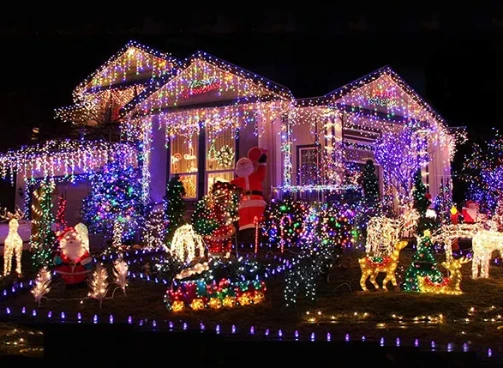
Extravagant motif Christmas lights display covering a house and front yard
Installation simplicity separates motif Christmas lights from string lights.. Most motifs arrive fully assembled with a single power cord and hanging ring. Mount them on walls, fences, windows, or stake them in your yard. String lights demand measuring, planning spacing, and securing multiple connection points—a process that can take hours for complex displays.
Energy consumption favors modern motif lighting significantly. LED motifs typically consume 75-90% less electricity than comparable incandescent displays. A 48-inch LED snowflake motif might use just 15-20 watts while delivering brilliant illumination visible from down the block.
Popular Motif Christmas Light Types for Outdoor Displays
Rope Light Motif Christmas Lights
Rope light motif Christmas lights use LED bulbs encased in durable PVC tubing wrapped around metal frames. The weatherproof construction withstands rain, snow, and temperature fluctuations from -20°F to 120°F. These designs range from 12 inches for window accents to 48 inches for prominent yard displays.
The uniform glow creates clean, professional-looking designs. Unlike string lights where individual bulbs create a dotted effect, rope light provides continuous illumination that defines shapes clearly from any viewing distance. Popular designs include snowflakes (18-point and 40-point variations), reindeer in leaping poses, candy canes, and “Merry Christmas” signs.
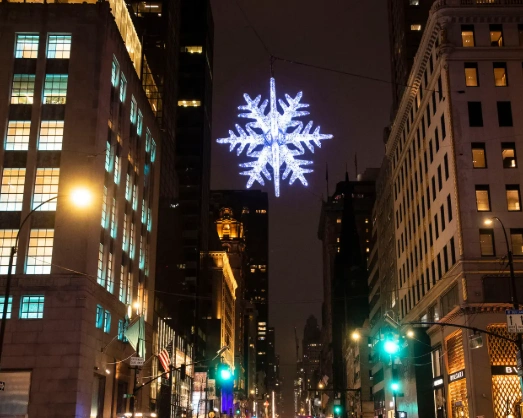
Oversized snowflake motif Christmas lights over a city street
Commercial-grade rope light motifs feature UV-protected tubing that resists yellowing and cracking across multiple seasons. Residential versions typically carry 2-3 year warranties, while commercial options often include 5-year coverage.
LED Dimensional Motifs
Three-dimensional motif Christmas lights add depth that flat designs cannot match. These constructions use wire frames with LED lights positioned at varying distances from the backing, creating layered effects visible from multiple angles. A 3D star might feature a reflective acrylic center surrounded by LED points extending outward.
Dimensional designs work particularly well as ground displays where viewers approach from different directions. A 5-foot tall dimensional reindeer positioned in your front yard becomes a neighborhood landmark rather than just another decoration.
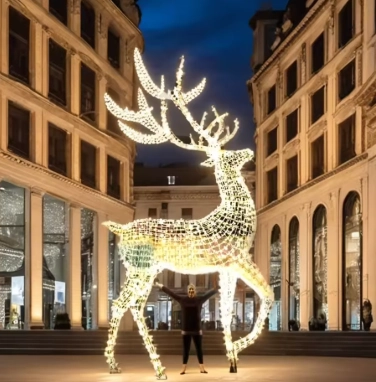
Giant reindeer motif Christmas lights installation
The added complexity comes with higher price points—expect to pay 40-60% more than comparable 2D designs. However, the visual impact often justifies the investment for homeowners seeking truly distinctive displays.
Folding Motifs
Storage challenges plague many Christmas decorators.Folding motif Christmas lights address this by collapsing to one-quarter their display size. A 36-inch snowflake folds down to roughly 9 inches square, allowing stacked storage in closets or under beds.
The folding mechanism typically uses hinged sections that snap into locked positions when deployed. Quality folding motifs should require minimal force to open and close while maintaining rigid stability during display. Check for reinforced hinge points—the most common failure area in folding designs.
These space-saving options prove especially valuable for apartment dwellers and homeowners with limited storage. The convenience premium usually adds 15-20% to the cost compared to fixed-frame equivalents.
Neon Flex Motifs
Neon flex technology delivers the bright, consistent glow of traditional neon signs using flexible silicone LED strips. The result combines the vibrant appeal of neon with LED efficiency and durability. Neon flex motifs excel in modern or minimalist design schemes.
The color saturation exceeds standard LED rope light significantly. A neon flex “JOY” sign produces deep, rich colors visible in daylight—not just after dark. This makes them effective for 24-hour visual impact during the holiday season.
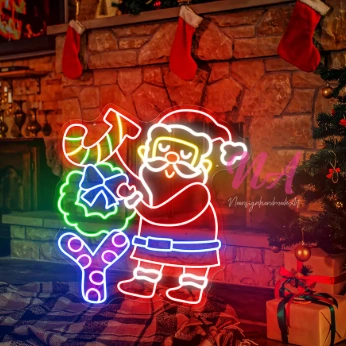
Neon Santa motif Christmas lights by the fireplace
Installation requires slightly more care since neon flex strips bend more freely than rope light. Secure them properly to prevent sagging or distortion. Most designs include pre-drilled mounting holes at strategic points to maintain intended shapes.
Creative Ways to Use Motif Christmas Lights in Your Holiday Display
Window Frame Displays
Mount rope light motifs directly on window glass using suction cup hooks or against window frames using adhesive clips. This inside-out approach creates glowing designs visible from the street while adding ambiance inside your home. A 20-inch snowflake centered in each front window establishes symmetry that appeals to the eye.
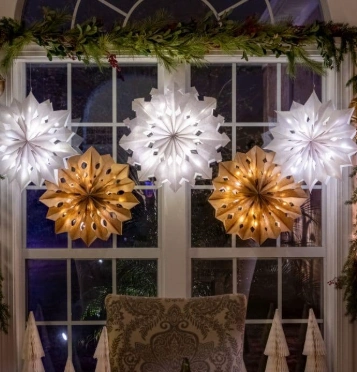
Window snowflake motif Christmas lights display
Layer multiple motifs at different heights within large windows. Position a 14-inch star at the top, a 12-inch snowflake in the middle, and a small present motif at the bottom. This vertical arrangement draws the eye upward and makes standard windows appear more grand.
Combine motifs with sheer curtains for a softer effect. The fabric diffuses the light, creating an elegant glow rather than harsh direct illumination. This technique works beautifully for bedroom or dining room windows where you want festive atmosphere without glaring brightness.
Fence Line Storytelling
Transform boring fence sections into narrative displays using sequential motifs. Position Santa and his sleigh on the left, followed by three reindeer spaced evenly, creating a flying scene across your property line. Viewers walking or driving past experience the story unfolding.
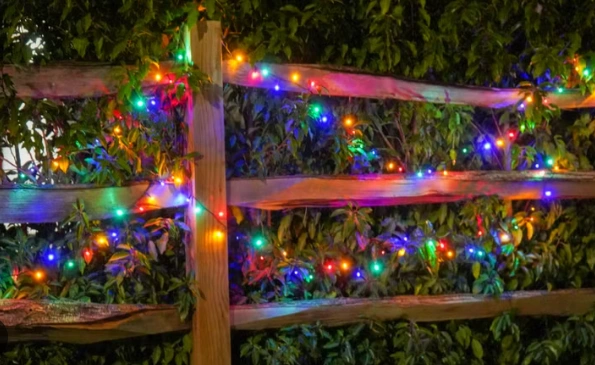
Fence line motif Christmas lights along a garden
Vary the motif sizes to create depth perception. Place smaller motifs toward the back of your yard and larger ones closer to the street. This forced perspective makes yards appear deeper while adding visual interest from different viewing distances.
Alternate motif types rather than repeating the same design. A pattern of snowflake-star-snowflake-star creates rhythm without monotony. Mix warm white and cool white options to add subtle color variation while maintaining cohesive styling.
Rooftop Silhouettes
Position dimensional motifs along rooflines for dramatic sky-backed presentations. Santa figures waving from rooftops became iconic for good reason—they’re visible from blocks away and create memorable neighborhood landmarks.
Use rope light to connect individual motifs along the roofline, creating an integrated display rather than isolated elements. Run warm white rope light between a star, candy cane, and snowflake to unify the composition. This technique also guides installation by providing reference points for spacing.
Consider sight lines from multiple directions. A motif beautiful from the street might be invisible from your driveway. Position key pieces where they’re visible from primary viewing angles—typically the street and your front walkway.
Garden Bed Focal Points
Stake motifs into garden beds and shrub plantings for unexpected delight. A 24-inch illuminated present positioned among evergreen shrubs creates the illusion that Santa left gifts in your landscaping. This works particularly well with net lights or string lights wrapped around the surrounding plants.
Use motifs to highlight garden features that disappear in winter. A decorative boulder, fountain, or statue becomes a seasonal attraction when paired with complementary motif lighting. The lights draw attention to elements that typically fade into darkness.
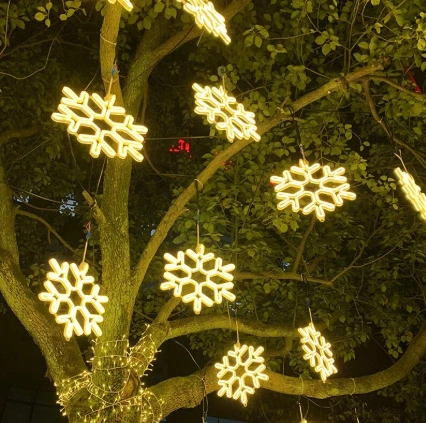
Tree decorated with snowflake motif Christmas lights
Group motifs in odd numbers—three or five rather than two or four. This principle from landscape design applies equally to holiday lighting. Odd-numbered groupings create more natural, less rigid compositions that feel intentionally designed rather than arbitrarily placed.
Balcony and Porch Transformations
Small outdoor spaces benefit enormously from motif lighting’s compact impact. A single 30-inch “Merry Christmas” sign mounted on a balcony railing announces your holiday spirit without overwhelming limited space. Pair it with a potted evergreen wrapped in white string lights for a complete mini-display.
Create vertical interest on porch posts by mounting motifs at different heights. Position a small candy cane at eye level and a larger snowflake near the top. This draws eyes upward and makes standard-height porches feel more impressive.
Hang motifs from porch ceilings using fishing line or thin wire to create floating effects. A 16-inch star suspended two feet below your porch ceiling appears to hover magically. Adjust the hanging length to ensure the motif doesn’t hit anyone’s head—keep a minimum 6-foot-6-inch clearance.
Combining Motif Lights with Other Holiday Decorations
Layering with String Lights
The most impactful displays use motifs as anchors surrounded by string light accents. Place a large snowflake motif as your centerpiece, then drape warm white string lights in sweeping curves around it. The string lights provide ambient glow while the motif delivers focused visual interest.
Match light colors carefully. Cool white motifs pair best with cool white string lights, warm white with warm white. Mixing temperatures creates visual confusion unless done intentionally for specific effects. The exception: multicolor motifs work with either white temperature in supporting string lights.
Calculate power loads before connecting lights. Most LED string lights allow 40-50 sets connected end-to-end, but adding motifs to the circuit reduces that number. Use separate circuits for heavy displays to avoid tripping breakers during peak holiday viewing hours.
Wreath and Garland Integration
Mount small motifs within traditional wreaths for modern twists on classic decorations. A 10-inch LED snowflake positioned in the center of a 24-inch evergreen wreath creates a contemporary focal point while preserving traditional greenery appeal.
Weave rope light motifs through garland arrangements along mantels or stair railings. The lights peek through the greenery, creating depth and dimension impossible with flat-mounted designs. Secure the motif frame to the mantel first, then drape garland around it rather than trying to attach the motif to installed garland.
Coordinate motif themes with wreath decorations. If your wreaths feature red bows and pinecones, choose motifs in warm white or red accent colors. Silver and blue wreath decorations call for cool white or blue-accented motifs. This color harmony unifies your entire display.
Inflatable Partnerships
Pair motifs with inflatable decorations for displays that work day and night. Inflatables provide bold daytime impact with their size and bright fabric colors, while motifs dominate after dark with superior illumination. Position motifs near or behind inflatables to create lit backgrounds that enhance both elements.
Balance sizes carefully. A 10-foot inflatable Santa shouldn’t share the scene with tiny 12-inch motifs—the scale mismatch looks accidental. Match impressive inflatables with 36-inch or larger motifs to maintain visual weight balance.
Consider theme coordination. An inflatable snow globe pairs naturally with snowflake motifs, while an inflatable reindeer works with star motifs and candy canes. Mixing too many unrelated themes creates visual clutter that diminishes overall impact.
Projection Mapping and Motif Combos
Modern projection lights cast animated patterns onto home exteriors—snowflakes falling, Santa flying, stars twinkling. Combine static motifs with these projections for displays that offer both consistent lighting and dynamic movement.
Position motifs outside projection areas to avoid interference. A snowflake motif on your garage door works while projecting falling snow onto your home’s main facade. The combination provides both architectural emphasis (the motif) and atmospheric movement (the projection).
Use motifs to frame projection areas. Mount candy cane motifs on either side of a projection zone to create a visual border that defines the animated area. This helps viewers understand where to look and prevents the projection from feeling disconnected from your overall design.
Installation Tips for Motif Christmas Lights
Planning Your Layout
Photograph your property from the street during daylight and again after dark. These images reveal exactly what viewers will see and help identify the best motif placement locations. Mark potential mounting spots directly on the photos to visualize the finished display.
Measure twice before purchasing. Note the dimensions of key areas—window widths, fence panel sizes, available wall space. A 36-inch motif looks perfect in your imagination but might overwhelm a 40-inch wide window when you actually hang it.
Create a power map showing outlet locations and maximum distances for extension cords. Most outdoor extension cords shouldn’t exceed 100 feet from the power source to avoid voltage drop that dims lights. Plan your display around available power access points.
Walk your property at night before installation to identify existing ambient light that might diminish your display. Streetlights, porch lights, and security lighting can wash out nearby decorations. Position motifs away from competing light sources for maximum impact.
Mounting Methods by Surface Type
Wood surfaces accept screw-in hooks easily. Position hooks at the top corners of motif frames for two-point suspension that prevents swaying. Pre-drill pilot holes to prevent splitting—especially important in cold weather when wood becomes more brittle.
Vinyl siding requires special hooks that slip under the siding lip without causing damage. These hooks support limited weight, making them ideal for rope light motifs but potentially problematic for heavy dimensional designs. Distribute weight across multiple hooks rather than relying on single attachment points.
Brick or stucco demands adhesive hooks rated for exterior use and rough surfaces. Clean the mounting area thoroughly with rubbing alcohol before applying hooks. Press firmly for 30 seconds and allow 24 hours curing time before hanging motifs—rushing this step leads to failed installations on Christmas Eve.
Metal fences and railings work perfectly with zip ties or adjustable straps. Thread ties through the frame’s hanging holes and around the fence rail, pulling snug without overtightening. Dark-colored ties blend into nighttime displays better than white versions.
Windows accept suction cups for lighter motifs. Clean glass completely—any dust or film prevents secure adhesion. Test suction cups with weight equal to your motif before trusting them with actual decorations. Morning sun can heat glass and cause suction failures, so position motifs on north-facing windows when possible.
Electrical Safety Essentials
Plug all outdoor motifs into GFCI-protected outlets. These safety devices cut power instantly if they detect current leakage, preventing electrical shock. Hardware stores sell portable GFCI adapters that convert standard outlets into protected ones for under $15.
Elevate connections above ground level. Even “weatherproof” connections can fail when sitting in puddles or snow. Use cord hangers to lift connections 6-12 inches off the ground, and cover them with junction boxes designed for outdoor lighting.
Avoid overloading circuits by calculating total wattage. Most household circuits handle 1,500-1,800 watts safely. Add up all motif and string light wattage on each circuit—it’s listed on product tags or in manuals. Stay below 80% of circuit capacity to prevent trips and fire hazards.
Inspect all cords, plugs, and motif frames before installation. Frayed wires, cracked insulation, or damaged frames pose fire and shock risks. Replace damaged items rather than attempting repairs—electrical components aren’t worth gambling with family safety.
Use outdoor-rated extension cords exclusively. Indoor cords lack weatherproof insulation and appropriate gauge wiring for outdoor power runs. Match cord gauge to distance: 16-gauge for runs under 50 feet, 14-gauge for 50-100 feet, 12-gauge for longer runs.
Weather Preparation
Secure loose elements before winter storms. High winds can turn unsecured motifs into projectiles that damage property or injure people. Add extra zip ties or mounting points to any motifs that move when you shake them gently.
Apply dielectric grease to all outdoor electrical connections. This clear grease prevents water infiltration and corrosion that causes connection failures. A small tube costs $5 and protects thousands of dollars in decorations throughout the season.
Position motifs to shed snow and ice naturally. Horizontal surfaces collect heavy snow loads that can bend frames or break bulbs. Angle motifs slightly downward or choose designs that naturally shed precipitation.
Remove ice buildup promptly but carefully. Never chip ice off motif frames with hard tools—this damages protective coatings and LED components. Instead, bring affected motifs into a warm space to melt naturally, then reinstall after weather improves.
Plan for cable management in snow conditions. Extension cords running across walkways become tripping hazards when buried in snow. Route cables along foundations or fence lines where they remain visible, or use cord covers designed to protect both the cord and foot traffic.
Energy Efficiency of Motif Christmas Lights
LED vs Incandescent Motifs
LED motifs consume 75-90% less electricity than incandescent equivalents while producing brighter, more vivid light. A 36-inch LED rope light snowflake using 18 watts costs roughly $0.43 to operate 8 hours daily for 30 days (at $0.12/kWh). The same size incandescent motif at 150 watts costs $3.60—more than 8 times higher.
Lifespan differences compound the savings. LED motifs typically last 50,000-100,000 hours compared to 3,000-5,000 for incandescent. You’ll replace incandescent motifs 10-20 times before an LED version fails. Factor in replacement costs when comparing upfront prices.
Heat generation favors LEDs dramatically. Incandescent bulbs waste 90% of energy as heat, making them hot to touch and risky near flammable decorations. LEDs stay cool enough to touch safely after hours of operation, eliminating fire hazards from contact with wreaths, garland, or fabric decorations.
Cold weather performance shows LED superiority clearly. Incandescent bulbs dim significantly in freezing temperatures, while LEDs actually perform better in cold conditions. Your LED motifs will look just as bright at 0°F as at 70°F—incandescent versions lose 20-30% brightness in extreme cold.
Smart Timer Benefits
Programmable timers eliminate wasteful all-night operation while ensuring lights activate before you arrive home. Set motifs to illuminate from 5 PM to 11 PM for typical viewing hours. This reduces electricity usage by 50-70% compared to dusk-to-dawn operation.
Modern smart plugs enable phone control from anywhere. Forgot to turn off lights before leaving for vacation? Disable them remotely. Want lights on for a party starting earlier than your usual schedule? Activate them on-demand. Smart control costs $15-25 per outlet and pays for itself through reduced electricity usage.
Astronomical timers adjust automatically for changing sunset times throughout the season. These sophisticated units know your location and calculate precise sunset/sunrise times daily. Your display activates at optimal viewing times without manual schedule adjustments as days shorten through December.
Random variation features make vacant homes appear occupied—an underrated security benefit. Rather than lights activating at exactly 5:00 PM every evening (signaling predictable absence), random timers vary activation within a 15-30 minute window. This subtle unpredictability deters potential burglars who watch for patterns.
Solar-Powered Options
Solar motifs eliminate extension cords entirely by harvesting daytime sunlight for nighttime illumination. A built-in solar panel charges an internal battery that powers LEDs after dark. These work brilliantly for remote locations—gardens, fence corners, or areas distant from outlets.
Expect 6-8 hours of runtime from a full charge, though performance depends on panel size and daily sun exposure. South-facing installations in direct sunlight perform best. North-facing or heavily shaded locations may provide only 3-4 hours illumination or require supplemental charging via USB ports.
Solar technology advances continue improving performance. Current-generation solar motifs use lithium batteries that charge faster, hold charges longer, and withstand cold better than older nickel-metal hydride batteries. Check battery specifications when comparing solar options.
Initial costs run 30-50% higher than plug-in equivalents, but zero operating expenses mean break-even occurs after 2-3 seasons of use. For decorations you plan to use for many years, solar options make economic sense while eliminating electrical installation entirely.
Maintenance and Storage for Long-Term Use
Seasonal Inspection Routines
Test all motifs before installation each year. Plug in each piece and verify all LEDs illuminate properly. Identifying failures before installation prevents the frustration of discovering dead motifs after you’ve mounted everything.
Clean frames and bulbs with gentle solutions. Mix mild dish soap with water and wipe frames using soft cloths. Avoid harsh chemicals that damage protective coatings. Pay special attention to connection points where moisture and dirt accumulate.
Tighten any loose frame connections. Metal frames can develop loose joints after years of handling and temperature changes. Secure joints using pliers—just enough to eliminate wobble without over-tightening that might crack welds or strip threads.
Replace individual damaged bulbs if designs allow access. Many rope light motifs feature sealed construction that doesn’t permit bulb replacement, but some higher-end models include removable sections. Check manufacturer specifications to understand repair options.
Proper Storage Techniques
Clean before storing, not after. Dirt and moisture trapped during storage accelerate corrosion and damage. Wipe down each motif thoroughly and ensure complete drying before packing away. This 10-minute investment prevents discovering rusty frames or corroded wiring next December.
Wrap each motif in protective material. Bubble wrap, foam sheets, or even old towels prevent scratches, frame bending, and bulb damage. Secure wrapping with tape that won’t leave residue—painter’s tape works well.
Store folding motifs in collapsed position but avoid excessive compression. Don’t stack heavy items on top of collapsed motifs or pile them too deeply. Excessive weight can damage hinge mechanisms or bend frames into shapes that won’t deploy correctly next season.
Label storage containers clearly with contents and installation locations. “Front Window Snowflakes” is more helpful than “Christmas Lights Box 3” when you’re unpacking next year. Add photos of installed displays to container lids for quick reference.
Control storage environment temperature and humidity when possible. Basements and garages work better than attics where temperature extremes can damage electronics and degrade plastics. Avoid floor storage where flooding might occur—elevate containers on shelves or pallets.
Warranty and Replacement Parts
Keep purchase receipts and warranty information accessible. Many LED motifs include 2-5 year warranties covering manufacturing defects. Document problems with photos and contact manufacturers promptly when issues arise—warranty claims require timely reporting.
Research replacement part availability before purchasing. Some manufacturers offer replacement power cords, mounting hardware, and even frame sections. This serviceability extends motif lifespans significantly compared to designs where any failure means complete replacement.
Join manufacturer email lists or social media pages for product updates and support. Companies often announce replacement part availability, installation tips, and seasonal promotions through these channels. You might discover solutions to problems you haven’t even encountered yet.
Consider extended warranties for expensive dimensional motifs. The extra 10-15% cost proves worthwhile when a $300 reindeer display fails in year three rather than year six. Extended coverage eliminates the gamble on expensive decorations.
Trending Motif Christmas Light Styles for 2024-2025
Minimalist Monochrome Designs
The 2024-2025 season shows strong movement toward single-color displays focusing on warm white or cool white exclusively. This sophisticated approach emphasizes design shapes over color variety. A collection of white snowflake motif Christmas lights in varying sizes creates elegant visual impact without the busy feel of multicolor arrangements.
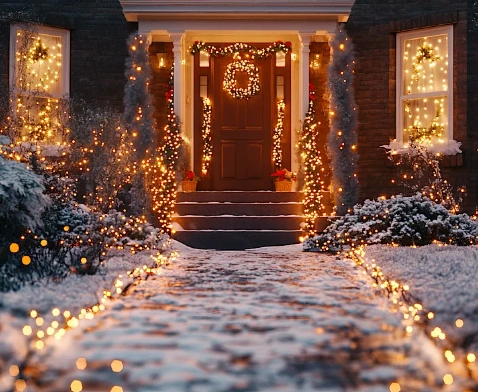
Warm white front entry motif Christmas lights
This trend reflects broader design movements toward minimalism in home décor. Homeowners want festive atmospheres that complement rather than overwhelm their exterior aesthetics. Pure white motifs accomplish this balance perfectly.
Sales data from major retailers indicates warm white outselling multicolor options by nearly 2-to-1 margins for the first time in recent years. This represents a significant shift from the traditional multicolor preference that dominated for decades.
Oversized Statement Pieces
Bigger definitely trends upward. Commercial-grade motifs in 60-inch and 72-inch sizes increasingly appear in residential settings. These massive displays create landmark status—the house everyone points out during neighborhood light tours.
A single 6-foot illuminated star mounted on a home’s peak makes more impact than a dozen small scattered motifs. This “go big or go home” philosophy simplifies installation while maximizing visual drama.
The trend connects to social media sharing culture. Oversized displays photograph dramatically and generate engagement on Instagram and Facebook. Homeowners increasingly design displays with sharing in mind, choosing elements that create memorable images.
Animated and Color-Changing Options
Smart LED technology enables motifs that shift colors or display animated patterns. A snowflake might transition slowly through blue, purple, and teal, or a star might twinkle with varying intensities. These effects add movement and interest without mechanical complexity.
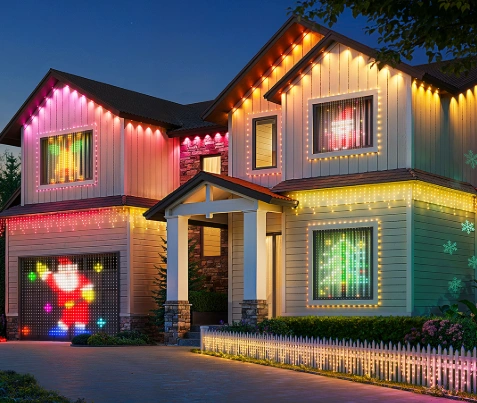
Smart color-changing house motif Christmas lights
App control allows customization unavailable in traditional motifs. Set your display to match your favorite sports team colors, coordinate with interior smart lighting, or program different effects for different evenings. This flexibility appeals strongly to tech-enthusiast decorators.
The market for smart holiday lighting grew 67% from 2023 to 2024 according to industry reports. Animated motifs represent the fastest-growing category within that segment, suggesting this trend has staying power beyond initial novelty appeal.
Vintage-Inspired Modern Designs
Motifs that blend retro aesthetics with modern LED efficiency capture growing interest. Think 1950s-style Christmas bulb shapes or vintage church window silhouettes rendered in contemporary rope light construction. These designs trigger nostalgia while delivering practical LED benefits.
The vintage trend extends across multiple Christmas decoration categories. Retro-styled string lights, mid-century ornaments, and classic color palettes (red, green, gold) all show renewed popularity. Motifs following this aesthetic fit perfectly into broader decoration themes.
Manufacturers report that vintage-styled motifs attract buyers across age groups—not just older consumers seeking nostalgia. Younger homeowners appreciate the distinctive character that differentiates their displays from standard contemporary designs.
Projection-Integration Hybrid Displays
Designs that work synergistically with projection lighting represent emerging opportunities. Motifs featuring reflective or translucent elements interact with projected patterns in ways traditional solid motifs cannot. A snowflake with clear acrylic panels catches projected falling snow beautifully.
These hybrid approaches require more planning than traditional installations but deliver effects impossible with either element alone. The combination of permanent structural lighting (motifs) and changeable projected patterns offers unusual versatility.
As projection lights become more affordable and accessible, expect increasing innovation in motifs designed specifically to enhance projected displays. This category barely existed three years ago but now claims dedicated sections in major retailers.
Frequently Asked Questions
How many motif lights do I need for my yard?
Start with one large statement piece (36-48 inches) as a focal point, then add 3-5 medium motifs (20-30 inches) to support it. A typical front yard achieves balanced coverage with 4-6 total motifs. Consider viewing distance—larger yards need bigger or more numerous motifs to maintain visual impact from the street.
Can motif Christmas lights stay up in snow and rain?
Quality outdoor-rated motifs withstand snow, rain, and freezing temperatures when properly installed. Look for IP65 or higher weatherproof ratings. The electronics and LED components are sealed, and frames feature corrosion-resistant coatings. However, extreme ice buildup should be removed carefully to prevent frame stress.
Do motif lights use more electricity than string lights?
LED motifs typically use less electricity than equivalent string light coverage. A 36-inch rope light snowflake consumes approximately 15-20 watts, while achieving similar visual impact with string lights might require 50-75 watts. The concentrated design efficiency of motifs usually beats string lights for power consumption per unit of visual effect.
How do I prevent motif lights from blowing away in wind?
Secure motifs using multiple attachment points rather than single-point suspension. Add zip ties at several frame locations for fence or railing installations. For ground stakes, ensure they penetrate at least 8-10 inches into soil. In extremely windy locations, add additional support stakes angled outward to create stable tripod geometry.