
OEM vs ODM Decorative Lights: Which Model Fits Your Product Line?
Have your own design? Start with OEM. Need a factory to help develop the product or adapt an existing design? Explore ODM. That is the simplest way to approach OEM vs ODM decorative lights. But before you choose, check who owns the design, which changes are possible, and what will be approved before production.
For a lighting brand, importer, commercial holiday decorator, or project contractor, the choice affects much more than the logo on a box. It shapes the design work, sample approval, sourcing risk, and your ability to reorder the same product next season. This guide compares the two routes using real decisions for motif lights and string lights, not invented prices or delivery promises.
One important catch: Suppliers do not always use “OEM” and “ODM” in exactly the same way. Treat these labels as a starting point. The signed specification, sample approval, and written agreement are what define the job.
OEM vs ODM Decorative Lights: The Side-by-Side Comparison
If you are comparing an OEM vs ODM lighting manufacturer, begin with the project’s starting point: is the factory working from your controlled design, or is it developing the design with you?
On a phone, swipe the table left or right to see every column.
| What to compare | OEM: Buyer-led design | ODM: Manufacturer-led design |
|---|---|---|
| Who provides the design? | The buyer supplies drawings, artwork, a reference sample, or defined specifications. | The factory proposes an existing design, platform, or new design based on the buyer’s brief. |
| Initial development work | Review the buyer’s design for manufacturing, materials, structural needs, and components. | Review available models or develop options, then adapt the selected concept. |
| Upfront cost factors | Engineering changes, prototypes, custom parts, tooling, and validation may be needed. | Existing parts may reduce some development work; redesign, samples, packaging, or testing may still cost extra. |
| Customization freedom | Greater scope to define an individual product, subject to feasibility and order terms. | Depends on the chosen platform and which design elements the factory agrees to change. |
| Sample path | Build or adapt a sample against buyer-controlled requirements; review revisions. | Select a reference design, approve the changes, then review a sample of the exact configuration. |
| Time to market | May take more development work if a new structure or components are required. | May be quicker when an existing design needs only limited changes. Not guaranteed. |
| Best-fit buyer | Established brands, project buyers with approved artwork, or businesses requiring tightly controlled specifications. | New product lines, distributors, or teams that need design support and a practical starting model. |
| Risks to confirm | Design rights, technical feasibility, revision control, tooling ownership, and test requirements. | Exclusivity, permitted changes, model availability, component substitution, and future reorders. |
Neither model automatically guarantees better quality, a lower unit price, or a faster launch. Compare suppliers against the same finished product requirements, including testing, packaging, and delivery terms.
Which Route Fits Your Situation?
A quick decision check
Choose OEM first if: you have client-approved drawings for a 3D holiday display, a distinct motif shape, or a string-light specification that must be followed closely.
Choose ODM first if: you know the desired effect, market, and price position but need the factory to propose suitable designs or develop a workable product.
Consider a mixed approach if: you can start from an existing lighting design but need significant changes to one feature. Ask the supplier to identify the standard parts, custom parts, and design responsibilities.
For a deeper look at production from buyer-supplied specifications, see
OEM decorative lights manufacturing.
For manufacturer-led product design and adaptation, see
ODM decorative light development.

Two Routes Through Development
The steps below are a practical way to plan an inquiry and approval process. Shinesall has also published the design, frame fabrication, assembly, testing, and packaging stages for
custom 3D motif lights.
The exact workflow for your product should be confirmed in your quotation and project documents.
OEM route — Your design leads
↓
Confirm materials, components, engineering work and costs
↓
Check the actual build; document any revisions
↓
Record model, materials, electrical details, packaging and tests
↓
Produce and check against the approved reference
ODM route — The factory contributes the design
Product category, market, appearance, functions and quantity
↓
Review existing models or proposed development work
↓
Agree on colors, dimensions, features, labels and packaging
↓
Identify standard vs custom elements and approval rights
↓
Confirm the delivered configuration matches the approval
The shared control point is step 4: no matter which model you choose, approve a physical sample and one written specification before bulk production. A picture of a similar model is not enough.
What Can You Actually Customize?
The options depend on the product’s structure and the supplier’s capabilities. For custom decorative lighting, ask for a written list of what is available, what needs new development, and what cannot be changed on the selected model.
Motif lights: shape, structure, and display requirements
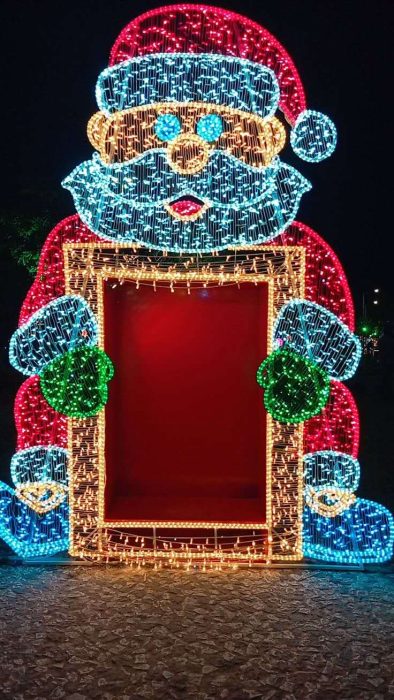
A commercial motif project may need a unique outline, size, frame material, LED color, lighting effect, power arrangement, and installation details. A shopping-mall reindeer with buyer-approved artwork is different from a seasonal motif selected from a factory’s existing range.
Explore
Motif Light designs
to gather references. A catalogue photo is a starting point, not proof that every variation is available.
String lights: configuration, electrical details, and packaging
A string-light order may involve total length, light spacing, color, wire type, connector system, power supply, controls, and carton layout. These details matter even when the product looks similar to a stock item. For ODM holiday lights, check which options the existing model actually supports.
Review
String Light products
for potential starting configurations.
For private label decorative lights, logo placement, product labels, instruction language, retail boxes, and shipping cartons may also be part of the scope. Branding alone does not determine whether a job is OEM or ODM, and private labeling does not automatically mean your design is exclusive.
Approve the Sample, Not Just the Photo
For either model, the biggest avoidable misunderstanding is approving the look of a light while leaving the actual product specification open. Before signing off, check these points against the physical sample and the written quote.
Sample and specification sign-off checklist
- Appearance: approved shape, size, finish, LED color, and lighting effect.
- Construction: agreed frame or wire materials, fixing details, connections, and replaceable parts where relevant.
- Electrical: voltage, power configuration, connectors, controls, and intended use environment.
- Documents: model reference, dated drawing or specification version, labeling, packaging artwork, and instructions.
- Quality: inspection criteria, required tests, who provides records, and how changes are approved.
- Commercial: sample fees, tooling if any, quantity by configuration, agreed delivery milestones, and ownership or exclusivity terms.
Ask for one approved reference sample (often called a golden sample) and an agreed specification version. If the supplier later replaces a component, changes the wiring, or modifies the packaging, decide in advance which changes require your written approval.
What Changes the Cost and Lead Time?
There is no reliable fixed price or universal lead time for OEM decorative lights or ODM products. A simple color-and-packaging change and a newly engineered 3D motif are different projects. Ask the manufacturer to explain the work behind the quotation.
Development factors: new drawings, prototype revisions, structural engineering, customized frames, molds or fixtures, and design approvals.
Material and production factors: component availability, color and configuration count, order quantity, factory capacity, and the need for special packaging.
Verification factors: sample review, applicable testing, documentation, inspection arrangements, and changes requested after approval.
Ask for separate, project-specific answers on sample charges, engineering or tooling charges, unit price, MOQ, sample approval schedule, and the production schedule after approval. This makes quotations much easier to compare fairly.
Four Risks to Settle Before Placing an Order
- Design rights and exclusivity.
Who owns your artwork, drawings, tooling, or custom improvements? Can the supplier sell the base design, or your exact variation, to other buyers? Put the answer in writing. - Compliance for the destination market.
Ask which product-specific standards and documents apply to the exact configuration. For example,
IEC 60598-2-20
covers certain lighting chains; its relevance depends on the product. EU buyers should also review the
European Commission guidance for importers and distributors.
A company certificate or an old test report does not prove every customized version is covered. - Repeat-order consistency.
Keep the approved sample, model number, component list, and revision records. Confirm what happens if an LED, controller, wire, or connector becomes unavailable. - Installation and after-sales support.
Commercial decorations may need installation instructions, suitable packing, spare components, and a clear method for reporting problems. Agree on responsibilities before shipping.
What to Send When You Request an OEM or ODM Quote
You do not need a perfect technical file to begin. You do need enough detail for the manufacturer to tell whether your idea fits an existing model or needs additional development.
Copy this short project brief:
Product type: [motif light / string light]
Design status: [our drawing / reference photo / need design support]
Installation or sales market: [country and indoor/outdoor use]
Main requirements: [dimensions, effect, power, controls, branding]
Estimated quantity: [units by model or design]
Target delivery window: [month and destination]
Questions: [sample, tooling, compliance documents, exclusivity]
If you are sourcing from a
decorative lights manufacturer in China,
ask the team to identify the recommended model and explain which requirements still need confirmation. That response is more useful than a generic “we support OEM/ODM.”
OEM vs ODM Decorative Lights: Frequently Asked Questions
Can I use ODM if I only have a sketch or a project idea?
Potentially, yes. An ODM-oriented project can begin with a concept and a request for design help. The manufacturer must still confirm whether it can develop the requested product and what design, sample, and engineering work is involved.
Does OEM always mean I own the finished design?
No. OEM commonly starts from buyer-controlled requirements, but rights to drawings, tooling, and improvements depend on the actual agreements and existing intellectual property. Do not rely on the acronym alone.
Is ODM always cheaper and faster than OEM?
Not always. Reusing an established design may reduce development work, but custom electronics, structural revisions, new packaging, testing, or repeated sample changes can affect both cost and timing.
Can private label decorative lights be exclusive to my brand?
They can be subject to an exclusivity agreement, but a private-label logo alone does not make a design exclusive. Clarify which product, design elements, region, and time period the agreement covers.
Should I choose OEM or ODM for a custom 3D motif light?
Use OEM as the starting point when you have approved artwork and precise requirements. Consider ODM when you need help turning a theme or visual concept into an engineered lighting structure. Either way, confirm drawings, structural requirements, samples, testing, and packing for the actual installation.
Ready to Choose the Right Development Model?
You do not have to decide on OEM or ODM before your first conversation. Share what you already have—an approved drawing, a product reference, or just a clear project brief—and ask which development route is feasible for your decorative lighting line.
Shinesall can review the product category, design requirements, quantity, destination market, and customization questions before discussing samples and next steps.