
How to Choose a Decorative Lights Manufacturer: A Buyer Checklist
Choosing the right decorative lights manufacturer involves more than comparing unit prices. For wholesalers, retailers, event companies, and commercial lighting contractors, the supplier you select can affect product consistency, project schedules, compliance, and long-term sourcing costs. If you are researching how to choose a decorative lights manufacturer, start by evaluating its product range, actual production capabilities, sample quality, quality control procedures, and delivery commitments. This checklist explains what to verify before placing an order, whether you source locally or work with a manufacturer overseas.
1. Check Whether the Product Range Fits Your Project
Start by identifying whether a supplier makes the decorative lighting products your business actually needs. A broad catalog may look impressive, but it does not automatically mean the manufacturer has experience with your specific product type.
Depending on your application, you may need LED string lights for retail or hospitality spaces, Christmas motif lights for public displays, firework lights for outdoor decoration, or landscape lighting for commercial installations.
Before requesting a quotation, prepare a clear product brief covering:
- Product type and application: Define where and how the lights will be used.
- Dimensions and appearance: Specify the required size, shape, colors, and lighting effects.
- Installation requirements: Explain mounting methods, connection arrangements, and site conditions.
- Customization needs: Identify any special designs, control functions, or packaging requirements.
- Order quantity: Provide an estimated quantity and indicate whether repeat orders are likely.
If you are comparing a decorative lights manufacturer in China with other suppliers, use the same product specifications to evaluate each candidate. This makes it easier to distinguish a genuine product match from a supplier that simply lists similar items online.

2. Verify the Manufacturer and Its Production Process
A supplier’s website is a useful starting point, but it cannot establish how much of the production process the company controls. Some businesses manufacture products in their own facilities, while others coordinate production through external factories. Either model can work, provided responsibilities and quality expectations are clear.
Ask potential suppliers:
|
SUPPLIER EVALUATION Factory Verification ChecklistFive questions to verify a supplier’s actual manufacturing capabilities. |
|
| 01 |
Where will the products be manufactured? |
| 02 |
Which production processes are completed in-house? |
| 03 |
Which components or processes are outsourced? |
| 04 |
Can the supplier provide current production photos, videos, or other verifiable evidence? |
| 05 |
Is a factory visit or independent inspection possible? |
Review the information against the products you intend to purchase. A company may have experience assembling standard string lights but limited experience with a custom decorative structure or a more complex installation.
You can also review the supplier’s manufacturing capabilities to understand its stated business scope. However, treat website descriptions as a starting point for verification rather than proof of every production claim.
A trading company is not automatically an unsuitable supplier. The more important questions are whether it can manage production reliably, communicate changes promptly, and take clear responsibility for product quality and delivery.
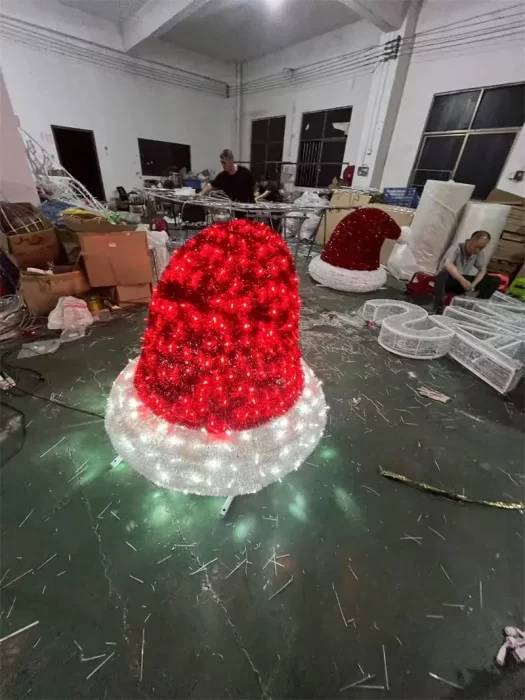
3. Request a Sample Before Bulk Production
A sample allows you to evaluate a product before committing to a larger order. It also gives both parties a concrete reference for the specifications and finish expected in mass production.
Before sampling begins, confirm the following:
- Product dimensions, materials, colors, and electrical specifications.
- Sample charges, customization costs, and expected development time.
- Required lighting effects, connectors, accessories, and installation details.
- Applicable safety and environmental requirements.
- The process for reviewing, revising, and approving the sample.
Once the sample arrives, check its appearance, construction, connections, and lighting performance under the intended operating conditions. For outdoor products, also verify the relevant ingress protection requirements and supporting test evidence.
Use a documented approval process:
Record any requested changes and obtain written confirmation of the final specifications. Keep the approved sample or an agreed reference record where practical.
This step reduces the risk of disagreements over color, dimensions, materials, or product performance after production has started. It also gives both parties a clearer basis for checking the finished order.
4. Check the Manufacturer’s Quality Control
A quality assurance statement is not enough on its own. Buyers should understand what the manufacturer checks, when those checks take place, and what evidence is available.
Depending on the product, relevant inspection points may include:
- Incoming materials: Check component specifications, quantities, and visible defects.
- Assembly and connections: Inspect wiring, joints, connectors, and structural components.
- Lighting performance: Check illumination, color consistency, and normal operation.
- Environmental protection: Verify applicable waterproofing or other protection requirements using suitable test methods.
- Finished products: Inspect appearance, assembly, accessories, and packaging before shipment.
Ask the manufacturer to explain its actual inspection procedures. Where available, request sample inspection records, test reports, or photographs of the relevant process.
For larger orders, consider agreeing on written acceptance criteria before production. You may also arrange a pre-shipment inspection, especially when the order involves custom products, multiple specifications, or a significant financial commitment.
The goal is not simply to find defects after they occur. It is to establish how product requirements will be checked and how nonconforming items will be handled.
5. Confirm Compliance for Your Target Market
Decorative lighting requirements vary by destination market, product design, electrical configuration, and intended use. A document that applies to one product or market may not cover another.
Before placing an order, identify the requirements for the country where the products will be imported, installed, or sold. Then ask the supplier for the relevant certificates, test reports, declarations, or other supporting documents.
Check that:
- The documents cover the exact product model or applicable product family.
- The listed manufacturer and product details match the items being purchased.
- The testing or certification scope is relevant to the intended market.
- The issuing organization and document status can be verified.
- Any additional testing, labeling, or importer obligations are understood.
For example, buyers supplying products to European markets and those supplying products to the United States may need to follow different compliance pathways. Requirements can also differ between indoor decorative products and outdoor installations.
Do not assume that a supplier’s general statement about certification covers every item in its catalog. Resolve any documentation gaps before production or shipment, rather than discovering them when the goods are ready to enter the market.
6. Compare MOQ, Lead Time, and Delivery Terms
A suitable manufacturer must be able to meet your order quantity and project schedule. A low unit price offers little value if the minimum order quantity is too high or the delivery date does not match your installation plan.
Clarify these points before confirming the order:
- Minimum order quantity (MOQ): Check whether standard and customized products have different requirements.
- Sample lead time: Confirm how long sample development and revisions may take.
- Production lead time: Establish when the production clock starts, such as after sample approval, deposit payment, or final specification confirmation.
- Production scheduling: Ask how order volume and seasonal demand may affect the planned completion date.
- Packaging and shipping: Confirm packing requirements, delivery terms, and which party arranges transportation.
- Schedule changes: Agree on how delays, specification changes, or material shortages will be communicated.
Put the agreed schedule and delivery responsibilities in writing. Where project deadlines are critical, leave room for sample revisions, inspections, transportation, and customs clearance.
Avoid relying on a general statement that an order will be completed within a certain number of days. A useful lead-time commitment should specify the conditions under which the schedule applies.
7. Compare Quotations and Total Sourcing Costs
The lowest quoted unit price is not necessarily the lowest total sourcing cost. Two suppliers may quote different prices because they use different specifications, include different services, or calculate delivery costs differently.
Use the following checklist to compare quotations on a consistent basis.
| Quotation Item | What to Check |
|---|---|
| Product specifications | Model, materials, dimensions, and technical requirements |
| Unit price | Order quantity, currency, and price breaks |
| Samples and tooling | Separate sample, mold, or setup charges |
| Customization | Design changes, branding, and packaging |
| Testing and documents | Included tests, reports, and additional fees |
| Shipping | Delivery terms, freight, insurance, and excluded costs |
| Payment | Deposit, balance, and payment milestones |
| Lead time | Sample development and bulk production schedules |
| Warranty | Coverage, exclusions, and after-sales responsibilities |
Request itemized quotations where possible. If one supplier includes customized packaging while another charges separately, compare the final costs rather than the headline prices.
Also consider the commercial risks associated with unclear specifications, inconsistent quality, missed deadlines, and difficult warranty claims. These issues can create additional expenses even when the initial purchase price looks attractive.
Buying directly from a factory does not automatically guarantee a lower total cost than working with a trading company. Compare the complete offer, including product suitability, communication, production management, and the responsibilities each party accepts.
8. Identify Warning Signs Before Placing an Order
A supplier does not need to be perfect in every area, but unresolved risks should not be ignored before a large purchase.
Watch for these warning signs:
- The supplier cannot clearly explain where or how the products are manufactured.
- Product specifications remain vague despite repeated clarification requests.
- The sample differs from the agreed requirements without a clear explanation.
- Compliance documents do not match the product being purchased.
- The quotation contains unexplained charges or leaves important costs undefined.
- Delivery promises are made without clear production milestones or written confirmation.
- Inspection arrangements and responsibility for defective products remain unclear.
One warning sign alone does not necessarily mean a supplier is unsuitable. However, repeated inconsistencies or an unwillingness to provide reasonable evidence should prompt further checks.
Resolve important questions before paying for bulk production. If a supplier cannot provide a satisfactory explanation, consider delaying the order or evaluating another candidate.
Buyer Checklist: Before You Place an Order
Use this checklist to compare suppliers and confirm that the essential purchasing details are in place.
-
The product range matches my project requirements.
-
The manufacturer and relevant production facilities have been checked.
-
Product specifications and customization requirements are documented.
-
The sample has been reviewed and approved.
-
Quality checks and acceptance criteria are clear.
-
Required compliance documents have been verified.
-
MOQ, pricing, and lead time are confirmed in writing.
-
Packaging, shipping, payment, and warranty terms are clear.
If any critical item remains unresolved, clarify it before placing the bulk order. This simple step can help prevent avoidable disputes and make supplier comparisons more objective.
Find a Decorative Lights Manufacturing Partner
Choosing a decorative lights manufacturer is ultimately about finding a supplier whose products, production arrangements, quality requirements, and delivery commitments match your business needs.
Shinesall offers a range of decorative lighting products, including string lights, motif lights, firework lights, and other decorative lighting solutions. Buyers can explore the LED Christmas light production process to learn more about the manufacturing side of decorative lighting.
If you are evaluating suppliers for a wholesale order, commercial installation, or customized lighting project, prepare your product specifications, estimated quantity, destination market, and customization requirements before requesting a quotation.
Contact Shinesall to discuss your sourcing requirements and provide the details needed to assess whether the available products and production arrangements fit your project.